
How Long Does Driveway Sealcoating Take to Dry?
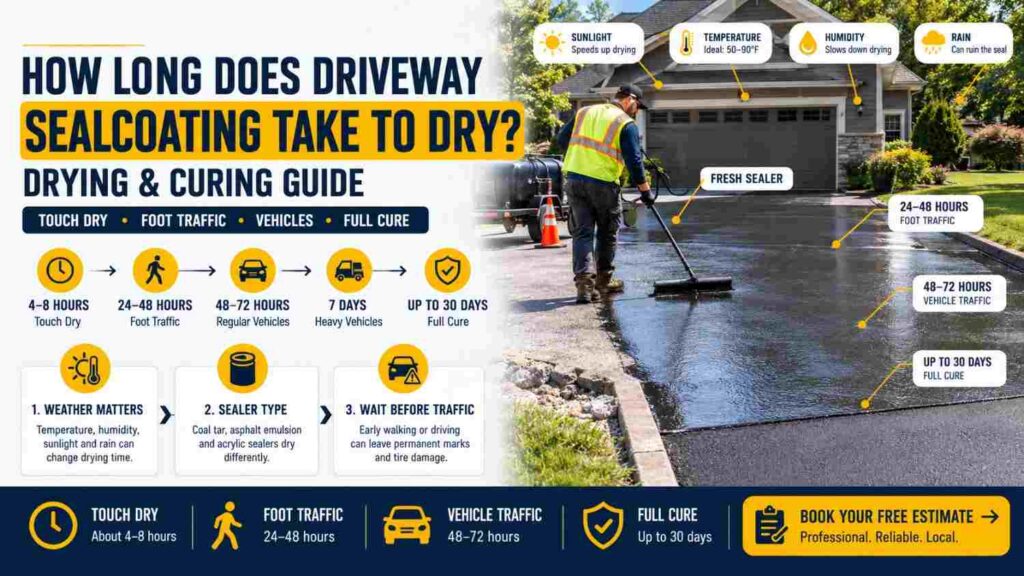
Driveway sealcoating, sometimes called blacktop sealing, dries in stages. Foot traffic can usually start after 24 to 48 hours. Vehicles can drive on it after 48 to 72 hours. Full curing takes up to 30 days. Weather and sealer type change these times.
Drying and curing are two different stages. Drying happens on the surface first. Curing happens all the way through the sealer layer.
Drying and Curing Are Different Stages
A sealer can feel dry within a few hours. It can still be soft underneath for weeks. Walking on it too early tends to leave footprints. Parking too early usually leaves tire marks.
General Drying Timeline
Sealcoating dries in stages after application:
- 4 to 8 hours: surface feels dry to light touch
- 24 to 48 hours: ready for foot traffic
- 48 to 72 hours: ready for regular vehicle traffic
- 7 days: ready for heavy trucks and RVs
- 30 days: fully cured to maximum hardness
Rushing any stage can damage the finish.
What Factors Affect Sealcoating Drying Time?
Several factors change how fast your driveway sealer dries. Weather is usually the biggest one. Sealer type comes next. Application thickness, humidity, sun exposure, and season all play a role.
Air Temperature
Warm air dries sealer faster than cold air. The ideal range is 50 to 90 degrees Fahrenheit. Below 50 degrees, sealer barely cures. Above 90 degrees, it can dry too fast and crack.
Humidity Level
High humidity slows down drying time. Water in the air stops the sealer from releasing moisture. Below 60 percent humidity works well. Above 85 percent, expect drying time to roughly double.
Sun Exposure
Direct sunlight speeds up drying. A sunny driveway can dry in about half the time of a shaded one. Trees and buildings that block the sun add hours or even days to the timeline.
Sealer Type
Water-based sealers often dry faster on the surface. Solvent-based sealers, also called petroleum-based, tend to cure more evenly through the full layer. Actual drying and curing times vary by product formulation and job conditions. Ask your contractor for the timing on the specific product they use.
Application Thickness
Thick coats take longer to dry than thin coats. Most contractors apply two thin coats instead of one thick coat. Thin coats dry more evenly and cure faster.
Season
Spring and fall usually offer the best sealing weather. Summer heat can cause bubbling in some conditions. Winter cold generally stops curing.
How Does Weather Affect Sealcoating Dry Time?
Weather has a large effect on sealer drying. The wrong weather can ruin a sealing job in one hour. Check the forecast for 24 hours before and after your seal date.
Best Temperature Range for Sealing
The best temperature for sealing is 50 to 90 degrees Fahrenheit. Ground temperature matters as much as air temperature. Asphalt below 50 degrees will not bond well with fresh sealer.
Most contractors use an infrared thermometer to check ground temperature. Ask your contractor what reading they got before starting.
Humidity Impact on Drying
Humidity above 85 percent can double typical drying time. Water in the air blocks the sealer from releasing its own moisture. Coastal and lakefront homes tend to see this problem more often.
Check the local dew point too. When ground temperature falls below the dew point, condensation can form on the sealer surface. Condensation ruins the cure.
Rain and Water Exposure Risks
Rain within 24 hours of application usually washes the sealer away. Even light drizzle can cause permanent streaking. Check the 48-hour forecast before every seal job.
Sprinkler systems cause the same damage as rain. Turn off automatic sprinklers for 48 hours after sealing.
Wind and Air Circulation
Light wind helps sealers dry faster. Strong wind blows dust and debris onto wet sealers. Debris trapped in the sealer usually becomes permanent.
What Types of Sealer Affect Drying Time Differently?
Not all driveway sealers dry the same way. Three main types dominate the residential market. Understanding which type is on your driveway helps you plan the wait.
Coal Tar Sealer
Coal tar sealer is the traditional choice for asphalt driveways. It typically dries to the touch in 4 to 8 hours. Full cure usually takes 24 to 48 hours. Coal tar offers strong oil and gas resistance.
Some states have banned coal tar sealer for environmental reasons. Check local rules on coal-tar sealcoat before choosing this option.
Asphalt Emulsion Sealer
Asphalt emulsion sealer is the most common water-based option today. It typically dries to the touch in 2 to 4 hours. Full cure usually takes 24 to 36 hours.
Asphalt emulsion is generally safer for the environment. It also has less odor during application.
Acrylic Sealer
Acrylic sealer costs more than the other types. It typically dries in 3 to 6 hours. Full cure usually takes 24 to 48 hours. Acrylic lasts longer but costs 30 to 50 percent more.
Water-Based and Solvent-Based Comparison
| Sealer Type | Dry to Touch | Full Cure | Best For |
|---|---|---|---|
| Coal tar | 4 to 8 hours | 24 to 48 hours | Heavy oil resistance |
| Asphalt emulsion | 2 to 4 hours | 24 to 36 hours | Everyday driveways |
| Acrylic | 3 to 6 hours | 24 to 48 hours | Long-lasting protection |
Times vary by product formulation and weather conditions. Always follow the manufacturer’s recommendation for the specific sealer used.
When Can You Walk on a Freshly Sealed Driveway?
Most sealed driveways handle foot traffic after 24 to 48 hours. Wait longer in humid or cool weather. Walk on the driveway edge first to test before walking across the middle.
Foot Traffic Safety Timeline
Foot traffic timing depends on weather during and after application:
- Hot dry day, low humidity: 12 to 18 hours
- Warm day, average humidity: about 24 hours
- Cool day or high humidity: 36 to 48 hours
- Cold day below 60 degrees: 48 to 72 hours
Test with light foot pressure before letting kids or pets on the driveway.
Signs the Sealer Is Ready
Look for these signs before walking on the driveway:
- Surface no longer feels sticky when touched
- Color has fully turned deep black
- Light pressure leaves no mark
When any of these signs are missing, wait longer.
Kids and Pets on Fresh Sealer
Kids and pets should wait at least 48 hours regardless of weather. Small feet and paws can leave marks in soft sealer. Toys and pet claws can gouge the surface.
Put up cones or caution tape to keep everyone off during the wait.
When Can You Drive on a Freshly Sealed Driveway?
Cars can drive on sealed driveways after 48 to 72 hours in most conditions. Heavy trucks and RVs need 7 days. Cold or humid weather extends both wait times.
Passenger Vehicle Timeline
Standard passenger vehicles can use the driveway after these wait times:
- Hot dry weather: about 48 hours
- Warm average weather: about 60 hours
- Cool or humid weather: about 72 hours
- Cold weather below 60 degrees: 96 hours or more
Drive slowly the first few times. Fast turns can leave tire marks even after the recommended wait.
Heavy Vehicle Timeline
Heavy vehicles need much longer than passenger cars:
- Pickup trucks and SUVs: 4 to 5 days
- Full-size trucks and vans: about 7 days
- RVs and boats on trailers: 10 to 14 days
- Commercial delivery trucks: about 14 days
Extra weight can crack sealer that has not fully cured underneath.
Parking Position Matters
Park in a different spot each time for the first two weeks. Fresh sealer stays soft even after it feels dry. Same-spot parking can leave permanent tire indents.
Signs Your Driveway Is Ready for Vehicles
Look for these signs before driving on the surface:
- Sealer looks uniformly dark with no lighter spots
- Weather has been dry for the past 48 hours
- No sticky feel anywhere on the surface
What Happens If You Walk or Drive Too Early?
Walking or driving on wet sealer usually creates permanent damage. Marks left in soft sealer rarely come out. In some cases you may have to seal the whole driveway again.
Common Damage From Early Traffic
Early traffic can cause several types of damage:
- Footprints that may never fade from the surface
- Tire marks shaped like your specific tread pattern
- Scuff marks from shoes turning on soft sealer
- Debris embedded in the sealer that traps dirt long-term
Most damage cannot be spot-repaired. It usually needs a whole new coat.
How to Fix Early Traffic Damage
Small marks may fade on their own after 30 days of full cure. Deeper marks usually need touch-up sealer applied by a contractor. Heavy damage means resealing the whole driveway.
When to Call the Contractor
Call the contractor if you accidentally walked or drove on the sealer too early. Same-day intervention sometimes saves the surface. Contractors have tools to smooth out fresh marks that homeowners cannot use.
Should You Seal a New Asphalt Driveway Right Away?
New asphalt needs time before its first sealcoating. Most contractors recommend waiting at least 180 days after installation. Sealing too early can trap oils in the asphalt and prevent proper cure.
The 180-Day Guideline for New Asphalt
The 180-day guideline is a common industry recommendation. Actual timing depends on the asphalt mix, weather during and after installation, traffic level, and the paving contractor’s specific recommendation. Some jobs need to wait a full 12 months.
Ask your paving contractor for their specific timing before the first sealcoating.
Why Waiting Matters
Fresh asphalt is still curing when it’s installed. It releases petroleum oils for months after paving. Sealer applied over uncured asphalt often cannot bond correctly.
The bond failure usually shows up as peeling and flaking within one year.
Signs Your New Driveway Is Ready
Common signs your new asphalt is ready for its first seal:
- Deep black color has faded to a lighter gray-black
- Surface has small cracks or slight roughness
- 180 days or more have passed since installation
When these signs appear together, first sealcoating can begin.
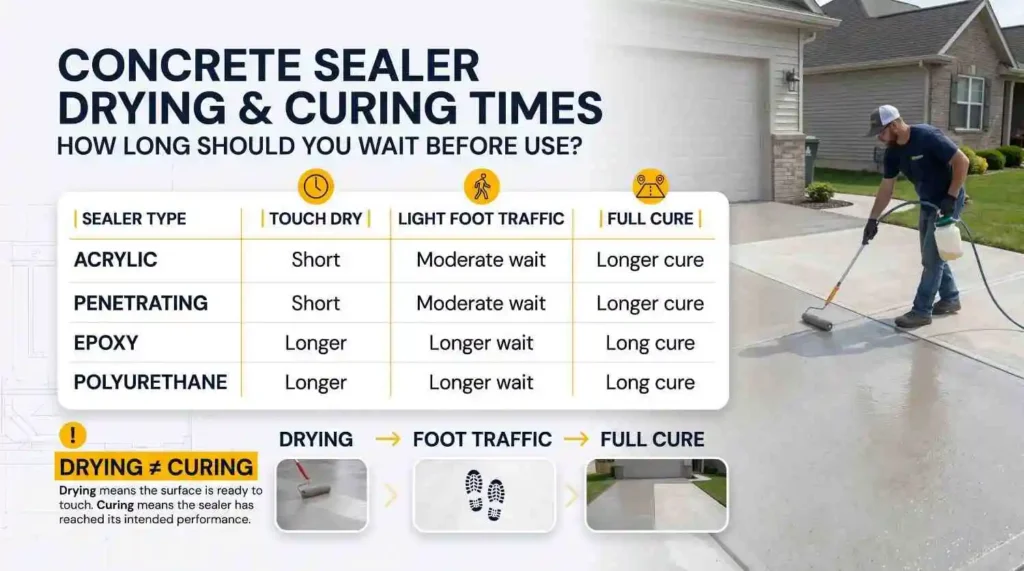
Note: This guide covers asphalt driveway sealcoating. Concrete driveways use different sealers with different drying and curing times.
What Is the Best Season for Driveway Sealcoating?
Spring and fall are usually the best seasons for sealcoating. Summer heat can cause bubbling. Winter cold generally stops curing. Pick your season based on your climate.
Spring Sealing
Late spring works well in most regions. Temperatures range from 60 to 80 degrees. Humidity is usually moderate. Rain risk exists but forecasts are reliable.
Best months: April through early June in most regions.
Summer Sealing
Summer sealing works when temperatures stay under 90 degrees. Very hot pavement can cause sealer to bubble. Early morning application helps avoid peak heat.
Best months: June through August with careful timing.
Fall Sealing
Fall often offers the most reliable weather for sealing. Temperatures drop into the ideal range. Humidity drops. Rain becomes less frequent.
Best months: September through mid-October in most regions.
Winter Sealing
Winter sealing is generally not recommended. Temperatures below 50 degrees stop curing. Snow and ice make application difficult. Wait until spring instead.
How Do You Prepare a Driveway Before Sealcoating?
Proper preparation is what makes sealcoating last. Skipping steps usually means the sealer will not bond. Follow the full prep list before any sealer goes down.
Sealcoating Equipment You Need
Basic sealcoating uses two main tools. A squeegee spreads sealer evenly across the surface. A spray applicator covers large areas faster. Professionals use both together on most jobs. Rental yards carry both tools for DIY projects.
Cleaning the Driveway
Thorough cleaning is the first step:
- Sweep off debris, leaves, and loose dirt
- Pressure wash the surface to remove ground-in grime
- Scrub oil and grease stains with degreaser
- Let the driveway dry completely before sealing
Wet asphalt does not accept sealer properly.
Repairing Cracks and Holes
Fix damage before sealing, including driveway repair needs such as cracks and potholes.:
- Fill cracks under half an inch with liquid crack filler
- Fill larger cracks with cold-patch asphalt
- Patch potholes with hot mix asphalt
- Let repairs cure fully before sealing
Sealing over unrepaired cracks usually means the cracks come right back through.
Protecting Nearby Areas
Cover surfaces sealer might touch:
- Grass and plants along the driveway edge
- Concrete walkways and patios
- House siding and garage doors
- Cars, bikes, and outdoor furniture
Sealer stains most surfaces long-term.
Blocking Off the Driveway
Set up barriers before applying sealer:
- Cones or caution tape at both ends
- Signs warning family members and neighbors
- Notes on the front door if you have visitors
- Alerts to regular delivery services
How Often Should You Reseal Your Driveway?
Most driveways need resealing every 2 to 3 years. High-traffic driveways often need it more often. Signs of wear tell you when the time is right.
Standard Resealing Schedule
Common schedule for residential driveways:
- New asphalt: first seal at 180 days or later
- Standard maintenance: reseal every 2 to 3 years
- High-traffic driveways: reseal every 18 to 24 months
- Harsh climate zones: reseal every 12 to 18 months
Resealing too often can be as unhelpful as under-sealing. Follow a schedule that matches your driveway’s condition.
Signs Your Driveway Needs Resealing
Look for these signs when deciding whether to reseal:
- Color has faded from black to gray
- Small hairline cracks are appearing
- Water no longer beads on the surface
- Pebbles and small stones are loose
- Last seal was more than 2 years ago
Two or more of these signs usually means it’s time to schedule sealing.
What Happens If You Wait Too Long
Waiting too long between seals often causes real damage:
- Water penetrates deeper into the asphalt
- Freeze-thaw cracks the surface faster
- UV rays break down the top layer
- Repair costs can become much higher than sealing costs
Regular sealcoating usually costs less than one major repair.
What Are Common Sealcoating Mistakes to Avoid?
Several common mistakes ruin sealcoating jobs. Each one is preventable with basic planning. Knowing these mistakes helps you supervise contractors or handle DIY jobs correctly.
Sealing in Wrong Weather
Sealing in wrong weather is one of the most common mistakes. Cold, hot, humid, or rainy days all cause problems. Check the 48-hour forecast before every job.
Applying Sealer Too Thick
Thick sealer looks better going on but cures poorly. It usually stays tacky for weeks. It can crack and peel within one year. Two thin coats generally beat one thick coat.
Skipping Crack Repair
Sealing over unrepaired cracks wastes time and money. The cracks usually show through within months. Water still enters through them. Fix cracks first, seal second.
Not Cleaning the Driveway
Dirt, leaves, and oil block sealer from bonding. A clean driveway is the foundation of good sealing. Skipping pressure washing before sealing usually leads to early failure.
Walking on Sealer Too Early
Walking on wet sealer often leaves permanent marks. Wait the full 24 to 48 hours before any foot traffic. Wait longer in cool or humid weather.
Using the Wrong Sealer Type
Not every sealer works on every driveway. Coal tar suits high-oil-exposure driveways. Asphalt emulsion suits standard homes. Match the sealer to the driveway conditions.
DIY Sealcoating Compared to Professional Sealcoating
DIY sealcoating saves money but takes real skill to get right. Most homeowners can handle small driveways under 500 square feet. Larger driveways or driveways with heavy damage usually need professional sealcoating. Professionals bring commercial-grade equipment and know how to time the work with weather.
Ready to Seal Your Driveway?
Get a free driveway sealcoating estimate from Rockzen Construction. Our team handles crack repair, cleaning, and professional sealing in one visit. Free estimates are available across all service areas.
Book Your Free EstimateWhat Do Property Owners Ask About Sealcoating Drying?
Can I seal my driveway in winter?
Not usually. Temperatures below 50 degrees stop the sealer from curing. Wait until spring when temperatures rise above 50 consistently.
How thick should sealer be applied?
Two thin coats of about 1/16 inch each generally work better than one thick coat. Thin coats cure evenly and last longer. Thick coats stay soft underneath for weeks.
Why does my sealed driveway still feel sticky after 24 hours?
High humidity or cool temperatures slow drying significantly. Wait an additional 24 to 48 hours. When stickiness lasts beyond 72 hours, contact your contractor.
Do I need to reseal my driveway every year?
No. Most driveways need resealing every 2 to 3 years. High-traffic driveways may need it every 18 to 24 months. Yearly sealing wastes money and can trap moisture.
How can I make sealcoating dry faster?
Sun exposure and warm temperatures are the fastest ways to speed drying. Pick a hot, sunny, low-humidity day for sealing. Avoid shaded driveways or plan for longer wait times.
Can I seal a concrete driveway with asphalt sealer?
No. Concrete driveways need concrete-specific sealers. Asphalt sealers do not bond well to concrete surfaces. Match the sealer to the driveway material.
Is DIY sealcoating cheaper than hiring a professional?
Yes for small driveways. DIY can save 40 to 60 percent on labor costs. But driveways over 500 square feet or with heavy damage generally need professional sealcoating for lasting results.
Can I seal my driveway if rain is in the forecast?
No. Rain within 24 hours of application usually washes the sealer away. Wait for a clear 48-hour weather window before starting.
What should I do if I accidentally walk on a wet sealer?
Contact the contractor right away. Same-day intervention can sometimes save the surface. Deeper marks may need touch-up sealer or a full reseal.
Sealcoating protects your asphalt for years when you get the timing right. Wait long enough. Watch the weather. Follow your contractor’s recommendation for new asphalt. Do these three things and your sealer should last 2 to 3 years without problems.
Ready to Sealcoat Your Driveway?
Rockzen Construction helps property owners with professional driveway sealcoating designed to protect asphalt from water, UV exposure, oil, and everyday wear. Drying time typically ranges from 30 minutes to 8 hours, while full curing can take 24 to 48 hours depending on the sealer, weather, and surface conditions. Every project starts with a free on-site assessment to determine the right sealcoating approach for your driveway. You receive a written cost estimate with clear project details and next steps. Most assessments are booked within 48 hours.