Rockzen Construction is a licensed NYC roofing contractor. We install, repair, and replace flat roofs and sloped roofs across all 5 boroughs. Every project meets NYC Building Code and DOB standards. Emergency response within 24 to 48 hours.
Rockzen Construction holds active NYC DOB registration and DCWP licensing. Ten years of NYC roofing experience back every project. Over 500 completed roofing projects across all 5 boroughs. An A+ Better Business Bureau rating reflects consistent quality.
Rockzen holds active NYC DOB registration and DCWP licensing. Full general liability insurance covers every project. Workers compensation protects the crew during roof work.
Rockzen mobilizes emergency crews within 24 to 48 hours. Temporary tarping and boarding stop water damage first. Permanent repairs follow within five to seven business days.
Every project comes with a written warranty. Manufacturer warranties cover materials for 10 to 20 years. Rockzen backs workmanship for a minimum of 5 years.
Rockzen offers free roof inspections across all 5 boroughs. Inspections include leak detection, material assessment, and written cost estimates.
Rockzen files all NYC DOB alteration permits through DOB NOW. Property owners never contact the DOB directly. Every filing includes scope, materials, and licensed contractor documentation.
Rockzen coordinates Local Law 11 facade inspections with roofing work when both are needed. Single-contractor coordination saves time and cost on tall buildings.
Rockzen provides eight core roofing services for NYC residential and commercial properties. All work meets NYC Building Code and DOB standards. Every service uses correct materials, permits, and installation methods for the building type.
Roof repair fixes leaks, damaged flashing, torn membranes, and minor structural issues. Standard repairs include membrane patching, flashing replacement, and drain cleaning. Emergency leak response happens within 24 to 48 hours. Learn more about Roof Repair NYC.
Roof replacement tears off existing materials and installs a complete new roofing system. Full replacement is needed when roof age exceeds material lifespan. Replacement also applies when damage covers more than 30 percent of roof area. Learn more about Roof Replacement NYC.
Roof installation covers new construction, building additions, and major renovations. New roofing systems include TPO, EPDM, modified bitumen, asphalt shingles, and metal roofing. Installation coordinates with NYC DOB permits and building inspections. Learn more about Roof Installation NYC.
Emergency roof repair addresses active leaks, storm damage, and structural collapse risk. Temporary protection installs within 24 hours to stop water entry. Permanent repairs follow emergency response within 5 to 7 business days.
Flat roofing installation uses TPO single-ply membranes, EPDM rubber systems, or modified bitumen. Commercial properties benefit from white TPO reflecting summer heat. Residential buildings often use EPDM for cost-effective long-term performance.
Rockzen provides professional roof inspections across all 5 boroughs. Every inspection includes leak detection, material assessment, drainage review, and written report. Free inspection is standard before any repair or replacement quote.
Rockzen offers scheduled maintenance for commercial and residential roofs. Twice-yearly maintenance includes drain clearing, seam checks, flashing review, and minor repairs. Regular maintenance extends roof lifespan significantly.
Commercial roofing serves office buildings, retail properties, warehouses, and apartment complexes. Residential coverage includes brownstones, rowhouses, single-family homes, and small apartment buildings. Both require NYC DOB permits and professional installation.
A roofing contractor installs, repairs, and replaces roofs on residential and commercial buildings. NYC roofing contractors must hold active NYC DOB registration and general liability insurance. Licensed contractors handle flat roofs, sloped roofs, and emergency leak response.
Most NYC buildings use flat roofing systems that need specialized installation knowledge. Commercial properties typically use TPO or EPDM membrane roofing. Residential brownstones and rowhouses often have sloped asphalt shingle or metal roofs.
Licensed roofing contractors carry NYC DOB registration and DCWP licensing. Unlicensed roofers cannot file DOB permits or pass city inspections. Property owners face fines when unlicensed work is discovered during future filings.
Several roles support roof work. Each has different scope:
| Role | Primary Responsibility |
|---|---|
| Roofing Contractor | Installs and replaces roofs and handles required DOB permits. |
| Roofer | Performs hands-on roofing installation, repair, and replacement work. |
| Roofing Inspector | Identifies roof damage, deterioration, and potential code issues. |
| Roofing Consultant | Advises on roofing materials, systems, specifications, and selection. |
Flat roofing systems use single-ply membranes, rubber materials, or multi-layer bitumen. NYC commercial buildings rely on TPO and EPDM for durability and energy efficiency. Proper drainage prevents ponding water that shortens roof lifespan.
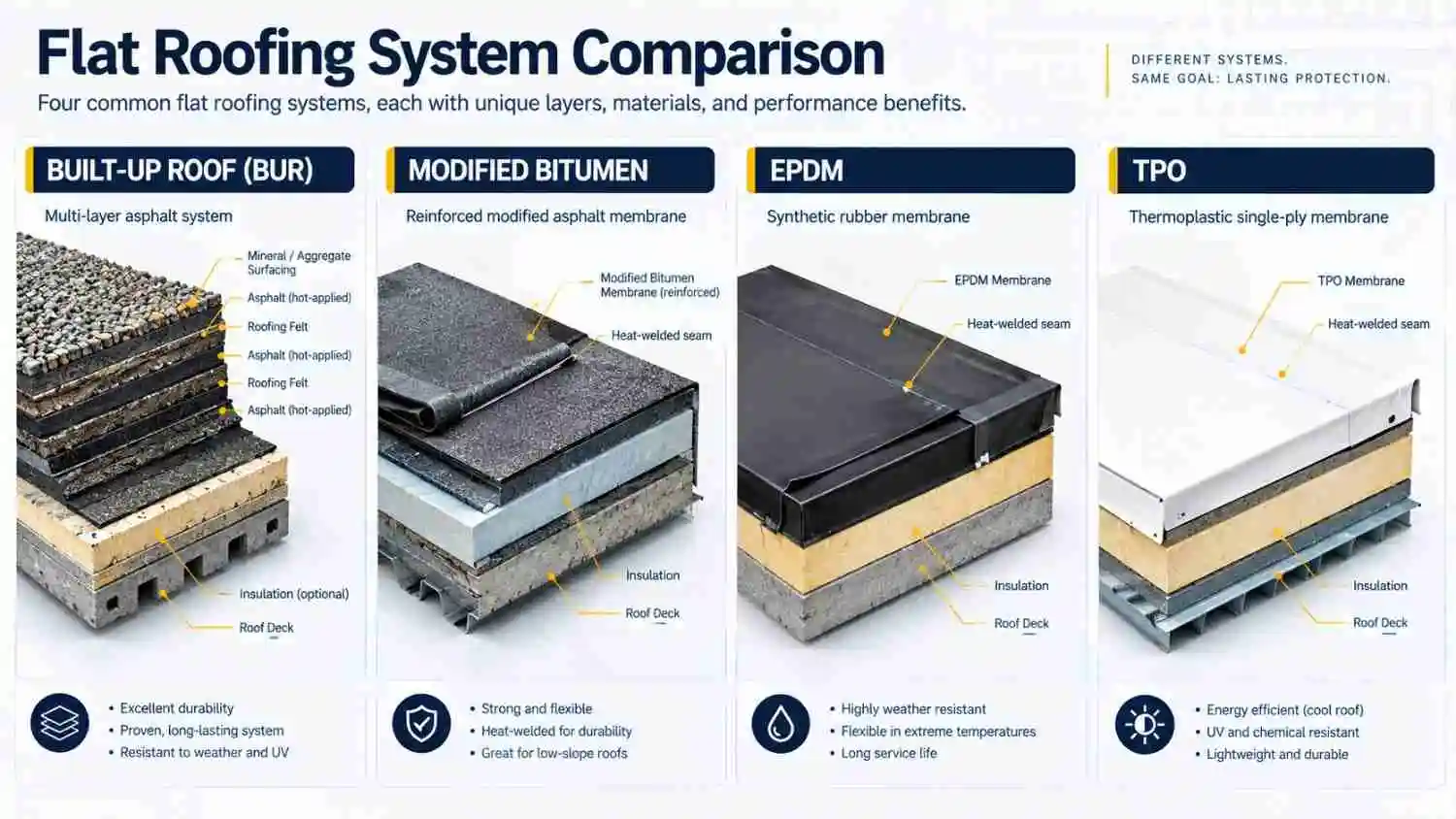
TPO stands for Thermoplastic Polyolefin. It is a white single-ply membrane heat-welded at the seams. The white surface reflects summer heat, which can reduce cooling costs measurably. TPO roofs last 15 to 25 years with proper maintenance.
EPDM stands for Ethylene Propylene Diene Monomer. It is a black rubber roofing material. Seams are glued or taped together. EPDM performs well in NYC freeze-thaw conditions and lasts 20 to 30 years.
Modified bitumen uses layered asphalt materials torch-applied or self-adhered. The multi-layer construction handles foot traffic better than single-ply systems. Modified bitumen lasts 15 to 20 years on commercial buildings.
Built-up roofing layers asphalt and reinforcing fabric in multiple plies. Gravel ballast protects the top surface. BUR systems are durable but heavy, needing strong structural support.
Green roofs add a vegetation layer over a waterproof membrane. Green roofing reduces stormwater runoff and building energy costs. Installation needs structural review to confirm load capacity.
Roof drains, scuppers, and proper slope prevent ponding water. Drains need clearing twice yearly to maintain flow. Tapered insulation creates slope on flat roofs to eliminate low spots.
NYC climate needs roofing materials that resist freeze-thaw cycles, UV exposure, and heavy precipitation. Commercial flat roofs perform best with TPO or EPDM membranes. Residential sloped roofs use asphalt shingles, metal panels, or slate.
Asphalt shingles are the most common residential roofing material in NYC. Architectural shingles last 15 to 25 years. They handle freeze-thaw cycles and cost less than metal or tile.
TPO membranes reflect heat and resist UV damage. White TPO can reduce summer cooling costs measurably. Heat-welded seams create watertight joints stronger than adhesive bonds.
EPDM rubber handles wide temperature ranges. The material stays flexible in cold weather, which prevents cracking. EPDM costs less than TPO but absorbs more heat.
Metal roofing sheds snow and ice quickly. Standing seam metal roofs last 40 to 60 years. Higher upfront cost pays back through longevity and low maintenance.
Slate is the longest-lasting residential material. Natural slate roofs can last 75 to 100 years. Slate suits historic brownstones and landmark properties where original material matching applies.
| Roofing Material | Lifespan | Best Application |
|---|---|---|
| Asphalt shingles | 15 to 25 years | Residential sloped roofs |
| TPO membrane | 15 to 25 years | Commercial flat roofs |
| EPDM rubber | 20 to 30 years | Residential and commercial flat roofs |
| Modified bitumen | 15 to 20 years | Commercial flat roofs with foot traffic |
| Metal roofing | 40 to 60 years | Residential and commercial sloped roofs |
| Built-up roofing | 20 to 30 years | Large commercial flat roofs |
| Slate | 75 to 100 years | Historic and landmark residential |
| Roof Component | Purpose |
|---|---|
| Flashing | Metal pieces sealing joints at chimneys, walls, and vents |
| Underlayment | Waterproof layer between the roof deck and shingles |
| Roofing felt | Traditional underlayment used beneath asphalt shingles |
| Gutters | Channels that carry water away from the roof edge |
| Roof vents | Openings that release attic heat and moisture |
Missing or damaged components cause most roof leaks. Regular inspection catches component wear before it turns into interior damage.
NYC roofing costs range from $1,500 for minor repairs to over $150,000 for large commercial replacement. Residential roof replacement averages $8,000 to $45,000 depending on size and materials. Commercial flat roof replacement runs $15,000 to $150,000 based on square footage and system.
| Roofing Service | NYC Cost Range |
|---|---|
| Emergency roof leak repair | $1,500 to $5,000 |
| Minor roof repair | $2,000 to $8,000 |
| Residential roof replacement | $8,000 to $45,000 |
| Commercial flat roof replacement | $15,000 to $150,000 |
| TPO roofing installation | $7 to $12 per square foot |
| EPDM roofing installation | $6 to $10 per square foot |
| Asphalt shingle replacement | $5 to $9 per square foot |
| Metal roofing installation | $12 to $20 per square foot |
Emergency leak repairs cost $1,500 to $5,000 including temporary protection. Minor repairs addressing flashing, membrane patches, or shingle replacement run $2,000 to $8,000. Extensive repairs covering multiple problem areas cost $8,000 to $15,000.
Residential brownstone roof replacement costs $12,000 to $35,000 for typical three-story buildings. Small apartment buildings run $30,000 to $80,000 for complete replacement. Commercial properties range from $40,000 to $150,000 based on roof size.
New construction roof installation costs $6 to $12 per square foot for flat systems. Sloped residential roofs run $5 to $20 per square foot depending on material. Complex roof designs with multiple penetrations raise installation costs.
NYC roofing work needs Department of Buildings permits for most repairs and all replacements. Minor roof repairs under $35,000 with no structural changes may not need permits. Complete roof replacement always needs DOB alteration permits and inspections.
Alteration permits (ALT-1) are required for roof replacement and major repairs. Permit applications include scope of work, material specifications, and licensed contractor information. Processing takes 2 to 4 weeks through the DOB NOW online portal.
Permits are required for complete roof replacement, structural repairs, and work exceeding $35,000. Small repairs like flashing replacement or minor membrane patches under $35,000 often do not need permits. Check with the DOB before starting any roof work.
Licensed contractors file permit applications on behalf of property owners. The DOB reviews plans and issues permits within 2 to 4 weeks. Final inspection happens after roofing completion before project sign-off.
Emergency roof repair is needed when active leaks cause interior damage. Storm damage that exposes building interiors also needs emergency response. Any structural collapse risk requires immediate action. Professional response within 24 to 48 hours prevents extensive water damage.
Active leaks during rain need immediate response. Water damages ceilings, walls, electrical systems, and insulation. Temporary tarping stops water entry while permanent repairs get planned.
High winds tear roofing materials and expose roof decks. Missing sections let rain and snow inside the building. Emergency boarding and temporary roofing protect interiors until replacement happens.
Rockzen emergency roofing crews respond within 24 to 48 hours. Temporary protection installs first to prevent additional damage. Permanent repairs get scheduled within 5 to 7 business days after emergency response.
NYC roofs fail from freeze-thaw cycles, heavy rain, UV exposure, snow load, and wind damage. NYC experiences 50 to 60 freeze-thaw cycles every year. Water enters roof cracks and freezes. The expansion breaks membrane materials apart.
Freeze-thaw cycles crack roofing membranes when trapped water expands. Water increases volume by 9 percent when it freezes. That pressure splits TPO seams, cracks EPDM rubber, and lifts asphalt shingles off roof decks.
Ponding water sits on flat roofs more than 48 hours after rain stops. Poor drainage lets water collect in low spots. Standing water deteriorates roofing membranes and shortens roof lifespan significantly.
NYC summer sun breaks down roofing materials through UV radiation. Asphalt shingles lose granules and crack. Rubber roofing becomes brittle and develops surface checking. White TPO membranes resist UV damage better than dark EPDM.
Heavy snow creates structural load on flat roofs. Ice dams form at roof edges when melting snow refreezes. The ice blocks drainage and forces water under roofing materials, causing interior leaks.
High winds lift roof edges and tear membrane seams. Flashing around chimneys, skylights, and parapet walls fails first. Missing or damaged flashing is a leading cause of NYC roof leaks.
NYC roofs show warning signs before major failure. Interior water staining, active leaks, visible damage, sagging sections, and ponding water all need professional assessment. Early detection prevents structural damage and expensive emergency repairs.
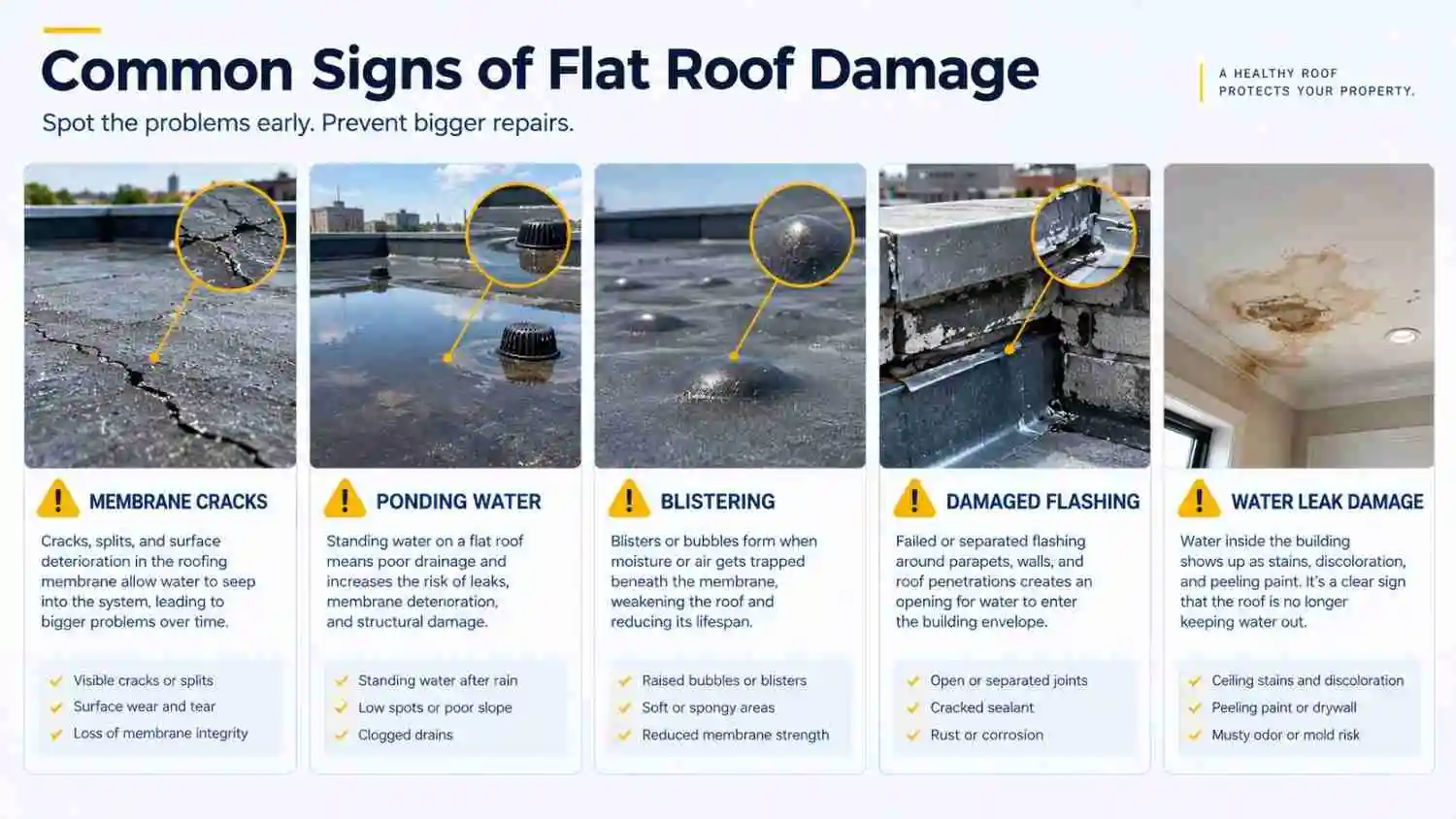
Brown or yellow ceiling stains indicate active roof leaks. Water travels along roof deck joints before appearing inside. Stains often show up far from the actual leak location, so professional leak detection helps find the source.
Active dripping during or after rain means immediate roof repair is needed. Water entering the building damages insulation, electrical systems, and structural framing. Emergency response prevents extensive interior damage.
Missing asphalt shingles expose the roof deck to weather. Torn TPO or EPDM membrane lets water enter. Visible cracks, blisters, or splits in roofing materials need prompt repair.
Sagging areas indicate structural damage to roof decking or support beams. Water-damaged wood decking loses strength and bends under weight. Structural repairs must happen before any new roofing installation.
Water sitting on flat roofs beyond 48 hours signals drainage problems. Blocked drains, settled roof deck, or poor slope cause ponding. Standing water cuts roof lifespan significantly without correction.
NYC roofing contractors serve residential brownstones, pre-war apartments, commercial properties, and high-rise buildings. Each property type has specific roofing systems, material requirements, and code compliance needs.
Brownstones and rowhouses typically have sloped roofs with asphalt shingles or slate. Historic properties may need Landmarks Preservation Commission approval. Proper attic ventilation prevents ice dam formation in winter.
Pre-war apartment buildings use flat or low-slope roofing systems. Many have built-up roofing that needs replacement with modern TPO or EPDM. Buildings over 6 stories need Local Law 11 facade inspection compliance.
Commercial properties need durable flat roofing that handles HVAC equipment and foot traffic. Modified bitumen or TPO systems work best. Mixed-use buildings coordinate roofing with occupied spaces below.
High-rise buildings need professional roofing contractors with scaffolding and safety equipment. Co-op boards require insurance certificates and tenant notifications. Work schedules around resident access and noise restrictions.
Rockzen Construction offers roofing services across all 5 NYC boroughs. NYC Building Code applies uniformly citywide. Borough-specific building types, historic density, and access conditions shape each project.
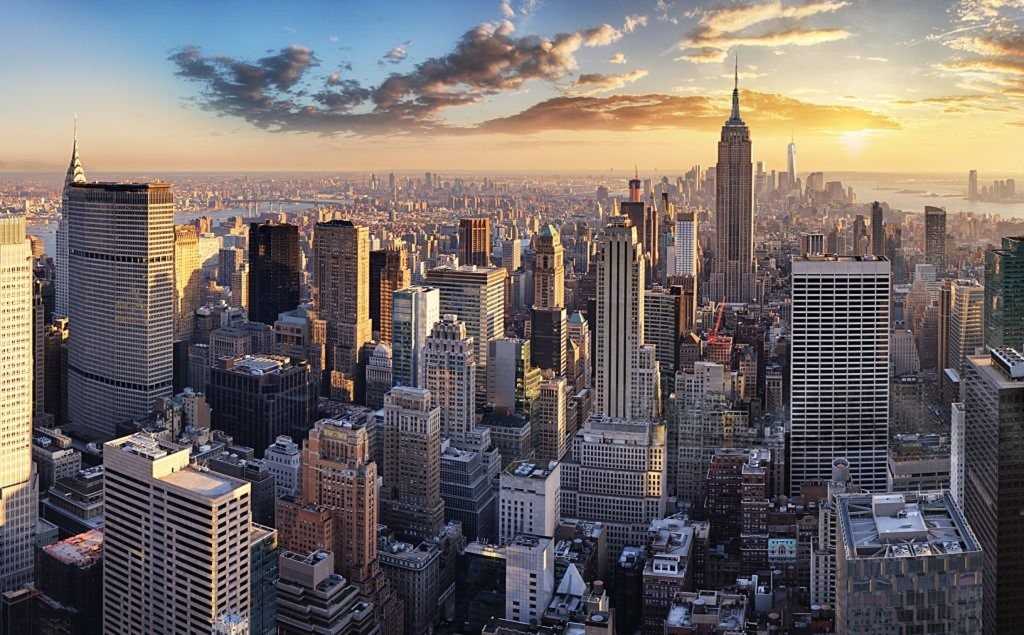
Rockzen Construction offers roofing services across Manhattan. Work covers high-rise commercial buildings and historic brownstones. Landmarks Preservation Commission approval applies in designated districts. Tight street access needs careful material delivery planning.
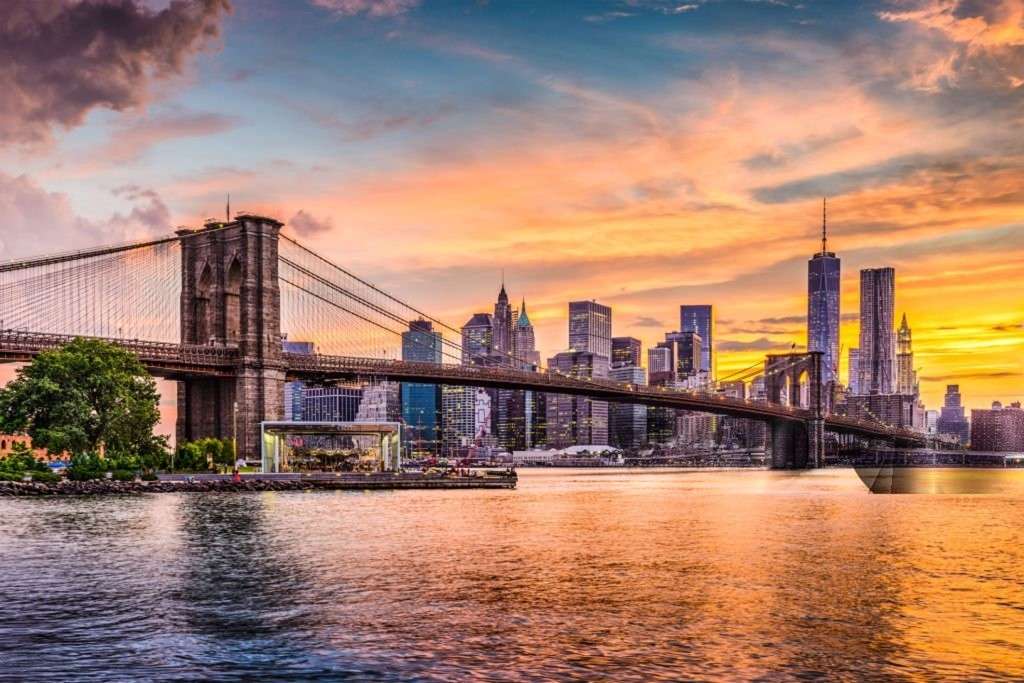
Rockzen Construction offers roofing services across Brooklyn. Brooklyn has the highest concentration of brownstone and rowhouse roofing projects. Park Slope, Carroll Gardens, and Brooklyn Heights need historic material matching. Flat roofs dominate commercial corridors along Atlantic Avenue and Flatbush Avenue.
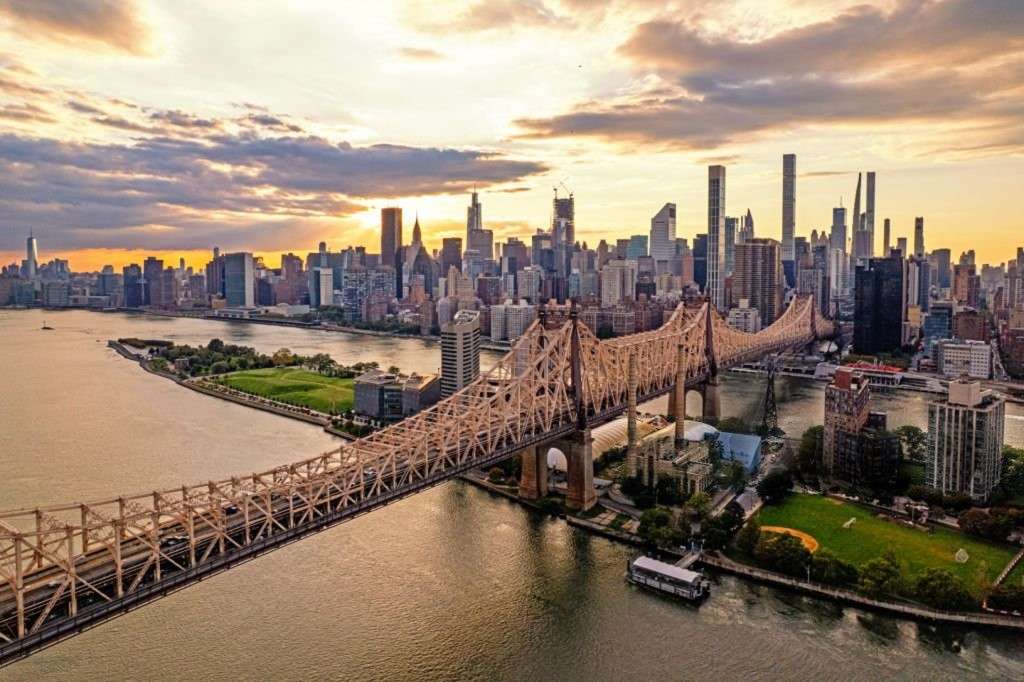
Rockzen Construction offers roofing services across Queens. Coverage spans residential and commercial properties from Astoria to Forest Hills. Pre-war apartment buildings and post-war homes need different roofing approaches. Lower building density simplifies material delivery and equipment access.

Rockzen Construction offers roofing services across the Bronx. Work includes Art Deco apartment buildings and mixed-use properties. Riverdale and Pelham Bay have single-family homes with sloped roofs. Commercial corridors along major streets need durable flat roofing systems.
Rockzen Construction offers roofing services across Staten Island. Residential properties use both flat and sloped roofing systems. Single-family homes benefit from asphalt shingle or metal roofing. Commercial properties along major corridors need TPO or EPDM flat roofing.
Residential roof replacement costs $8,000 to $45,000 depending on size and materials. Commercial flat roof replacement runs $15,000 to $150,000 based on square footage.
Asphalt shingles last 15 to 25 years. TPO and EPDM flat roofing lasts 15 to 30 years. Metal roofing lasts 40 to 60 years with proper maintenance. Slate can last 75 to 100 years.
Yes. NYC roofing contractors must register with the Department of Buildings. General liability insurance and workers compensation coverage are mandatory.
TPO and EPDM are the top flat roofing materials for NYC. TPO reflects heat and reduces cooling costs. EPDM handles freeze-thaw cycles and costs less.
Yes. Minor leaks from damaged flashing or small membrane tears can be repaired. Widespread damage covering more than 30 percent needs full replacement.
Roofs should be inspected twice yearly in spring and fall. Buildings over 6 stories need professional facade inspection every 5 years per Local Law 11.
Ponding water results from blocked drains, settled roof deck, or insufficient slope. Water remaining more than 48 hours after rain needs drainage correction.
Minor roof repairs take 1 to 3 days. Emergency leak response happens within 24 to 48 hours. Extensive repairs take 5 to 10 business days.
TPO stands for Thermoplastic Polyolefin. It is a white single-ply membrane roofing material. Seams are heat-welded for watertight joints. TPO lasts 15 to 25 years on flat roofs.
EPDM stands for Ethylene Propylene Diene Monomer. It is a black rubber roofing material. EPDM handles temperature extremes and freeze-thaw cycles. EPDM lasts 20 to 30 years.
A green roof adds a vegetation layer over a waterproof membrane. Green roofing reduces stormwater runoff and building energy costs. Installation needs structural review to confirm load capacity.
Emergency roof leak repair costs $1,500 to $5,000 including temporary protection. Permanent repairs add $2,000 to $8,000 depending on damage extent.
Yes. Roofing work happens year-round in NYC. Cold weather slows adhesive curing. Temperatures should stay above 40 degrees Fahrenheit for proper installation.
Modified bitumen is multi-layer asphalt roofing that is torch-applied or self-adhered. It handles foot traffic better than single-ply membranes. Lifespan is 15 to 20 years.
Local Law 11 requires facade inspections every 5 years for buildings over 6 stories. Inspections include roof-related facade conditions. Unsafe conditions need immediate repair.
Repair fixes isolated damage like leaks or flashing. Replacement tears off all materials and installs a new roofing system. Replacement is needed when damage exceeds 30 percent of roof area.
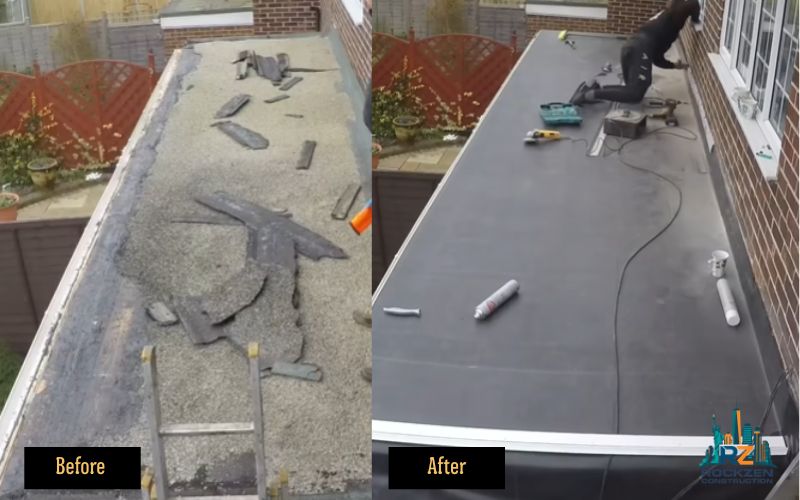
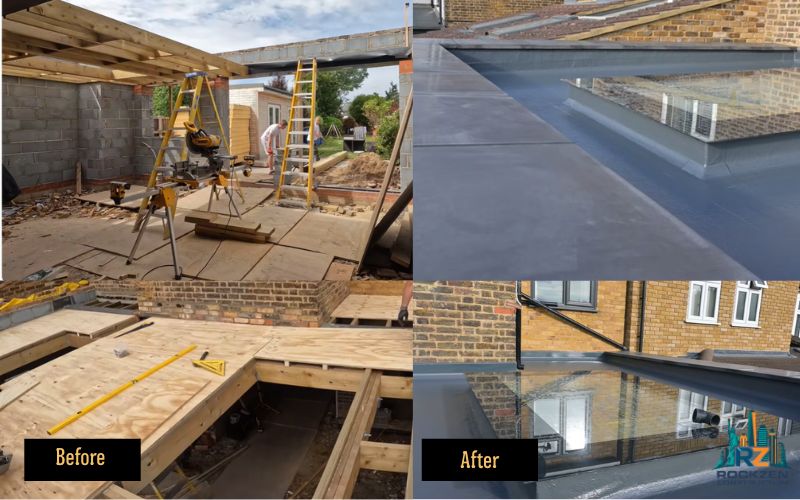
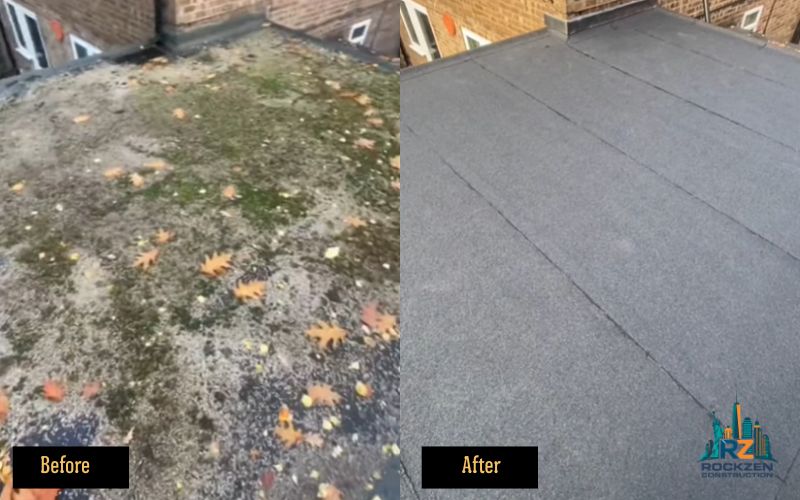
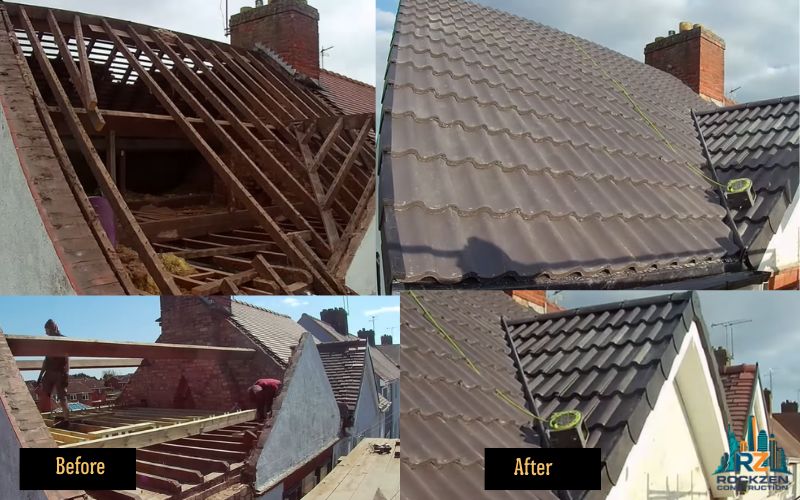
Contact Rockzen Construction for a free roof inspection across all five boroughs of New York City. Every inspection includes leak detection, material assessment, and a written cost estimate. Our licensed contractors install, repair, and replace roofs backed by full insurance and a written warranty.