Stucco Contractors NYC - Repair, EIFS Installation, and Facade Restoration
Rockzen Construction repairs and restores stucco facades across NYC. Licensed stucco contractor for residential and commercial buildings. All five boroughs.
Stucco is a cement-based exterior coating applied to building facades. It provides weather protection and an architectural finish. NYC buildings use both traditional cement stucco and synthetic EIFS. Properly installed stucco lasts 50 to 80 years with maintenance. Traditional stucco combines Portland cement, sand, lime, and water. The system bonds to masonry, concrete, or metal lath. NYC weather demands a proper base coat and breathable finish coats.
Stucco System Components and Structure
Every stucco system uses four layers working together. Each layer serves one function in the assembly. Base coat: bonds to the substrate and adds structural strength
Reinforcing mesh: prevents cracking and adds tensile strength
Finish coat: protects from weather and provides color
Waterproofing membrane: blocks moisture at terminations
Where Stucco Appears on NYC Buildings
Stucco covers brownstone facades, apartment walls, and commercial storefronts. Pre-war buildings often use cement rendered over brick. Modern buildings use EIFS for energy efficiency and detail.
Cement Stucco vs EIFS Synthetic Stucco
Cement stucco is a hard Portland cement plaster applied in coats. EIFS uses foam insulation boards with an acrylic finish. Cement stucco weighs about 10 pounds per square foot. EIFS weighs under 2 pounds per square foot. The lighter weight suits buildings with weight limits. Both systems need proper flashing and a drainage plane.
Comprehensive Services
Advanced Technology
Transparent Communication
What Causes Stucco Damage in New York?
Stucco damage in NYC comes from four main sources. These are freeze-thaw cycles, water infiltration, poor installation, and impact. New York sees over 40 freeze-thaw cycles each winter. Water trapped inside stucco expands when frozen and cracks it.
Water Infiltration Through Cracks
Water enters through cracks, failed flashing, and missing sealant. Trapped moisture rots the base coat and rusts the metal lath. Interior damage often appears months after the first crack.
Freeze-Thaw Cycle Damage
Freeze-thaw cycles crack stucco when water enters surface defects. Water expands about 9 percent when it freezes. That pressure breaks the cement bond and causes spalling.
Improper Installation and Base Coat Failure
Poor installation skips waterproofing or uses the wrong mix. Base coat failure happens when cement goes on too thin. The minimum base coat thickness is three-eighths of an inch.
Impact and Surface Deterioration
Impact from equipment, debris, and storms cracks stucco surfaces. Deterioration speeds up where drainage is poor or roofs leak. Regular inspection prevents minor damage from developing into structural damage.
Schedule a Free Stucco Inspection
A small river named Duden flows by their place and supplies it with the necessary regelialia. It is a paradisematic country, in which
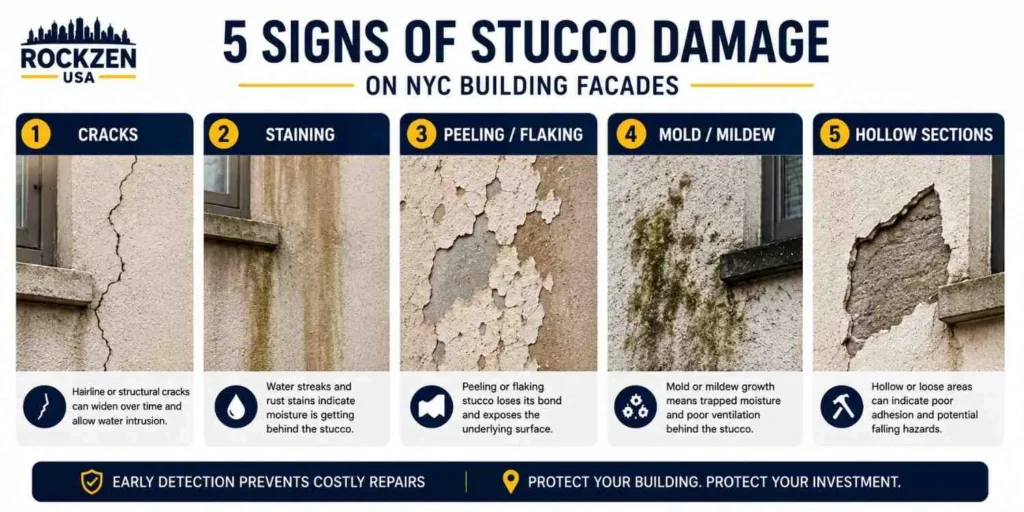
NYC stucco shows five warning signs before major failure. Early detection prevents water damage to interiors and structure. Most signs are visible during a routine exterior look.
Visible Cracks and Spalling
Cracks wider than one-eighth of an inch need professional assessment. Spalling is surface material breaking away in chips. Both let water in and speed deterioration.
Water Staining and Efflorescence
Water staining shows as dark streaks below windows and cornices. Efflorescence is white powder from salt migration. Both signal active water moving through the facade.
Peeling and Bubbling Coating
Peeling coating means the bond between layers has failed. Bubbling shows water trapped under the finish coat. Repair requires removing damaged material and prepping the base.
Mold Growth
Mold on exterior stucco signals a chronic moisture problem. Black, green, or brown staining means biological growth. Fixing it requires both repair and moisture removal.
Loose or Hollow Sections
Loose stucco sounds hollow when tapped. That sound means delamination from the substrate. Fast repair prevents sections from falling and causing hazards.
What Stucco Services Does Rockzen Construction Offer?
Rockzen provides seven core stucco services in NYC. These cover residential, commercial, and historic buildings. Work ranges from minor crack repair to full facade restoration. Every project meets NYC Department of Buildings code.
Crack Repair and Patching
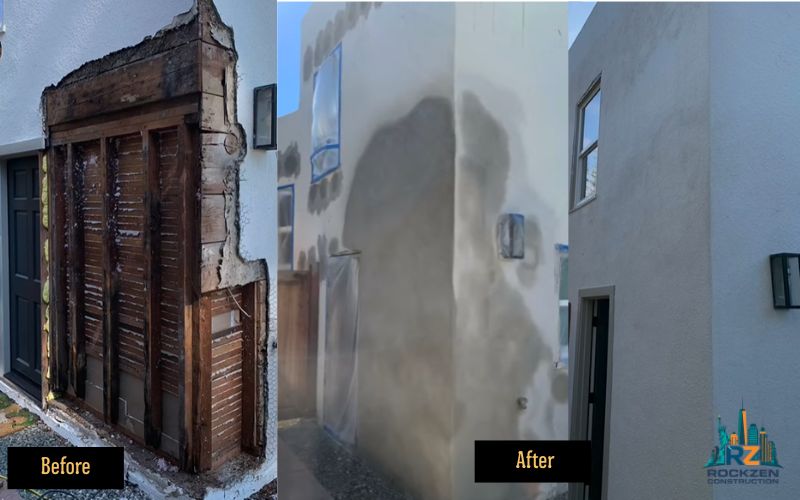
Rockzen Usa construction offer Crack repair handles isolated damage under six inches long. Crews remove damaged material, apply base coat, and match the finish. The repair uses breathable cement render matching the original.
Full Replacement and Resurfacing
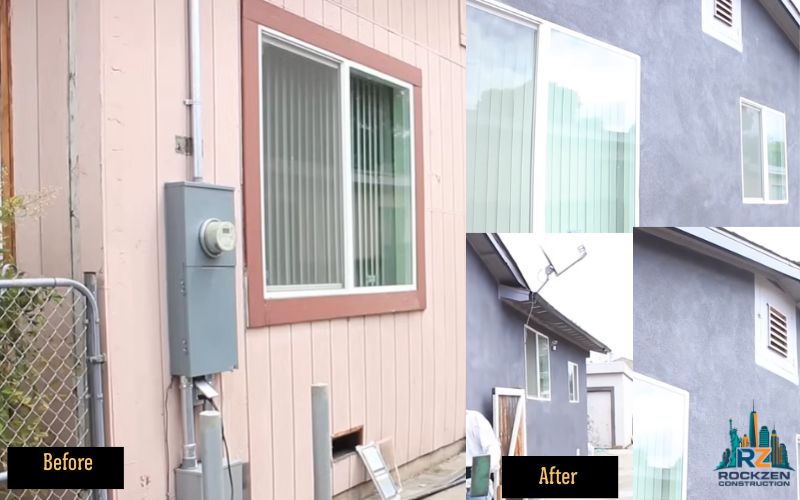
The Rockzen Expert Team provides full replacement, removing the damaged coating down to the substrate. Then, workers apply a new three-coat system with fresh lath and finish. Brownstone work follows historic material standards.
EIFS Installation and Repair NYC
EIFS installation applies synthetic insulation for energy efficiency. Repair addresses foam damage, mesh delamination, and finish cracking. Drainage-type EIFS meets current moisture-management code.
Brownstone Restoration NYC
Brownstone restoration matches historic material and meets LPC rules. Carbon testing determines the original lime and cement ratio. Work spans Park Slope, Carroll Gardens, and Upper West Side districts.
Waterproofing and Sealing
Waterproofing applies elastomeric coatings and breathable sealants. Flashing repair at windows and roof lines stops common leaks. Products are acrylic and silicone-based for the NYC climate.
We offer Commercial repair work focuses on storefronts, building-envelope issues, and violations. Work often aligns with Local Law 11 inspection needs. The scope covers sidewalk sheds, permits, and compliance documents.
Brownstone restoration matches historic material and meets LPC rules. Carbon testing determines the original lime and cement ratio. Work spans Park Slope, Carroll Gardens, and Upper West Side districts.
Rockzen stucco repair follows six steps from assessment to inspection. Crews manage permits, materials, and compliance paperwork. The full process takes two to six weeks by scope.
01.
Damage Assessment and Moisture Testing
A crew inspects the facade and tests for hidden moisture. Moisture testing shows whether water damage extends past the visible cracks. This step sets the true repair scope before any quote.
02.
NYC DOB Permit Application
Rockzen files the facade alteration permit through DOB NOW. The application includes the scope, materials, and licensed contractor details. Owners never handle the permit process themselves.
03.
Scaffolding Installation and Surface Preparation
Crews install scaffolding and a sidewalk shed where required. The work area is protected and the surface is cleaned. Loose and failing stucco is marked for removal.
04.
Damaged Stucco Removal and Substrate Repair
Deteriorated stucco is removed down to a sound substrate. Crews repair the masonry, lath, or sheathing underneath. Fixing the substrate first prevents the new stucco from failing early.
05.
Base Coat, Mesh, and Finish Coat Application
A new base coat goes on with reinforcing mesh. The finish coat is applied and textured to match the existing facade. Each coat cures fully before the next one goes on.
06.
Waterproofing Sealant and Final DOB Inspection
Crews apply breathable waterproofing at coats, flashing, and joints. A final DOB inspection confirms the work meets code. Owners receive completion documentation and the written warranty.
Residential stucco repair takes one to 1 day to 3 weeks after permit approval. Commercial EIFS runs two to six weeks by square footage. Emergency unsafe repairs begin within 24 to 48 hours.
Project Type
NYC Timeline
Minor crack repair
1 to 3 days
Brownstone facade restoration
2 to 4 weeks
EIFS installation (1,000 SF)
1 to 2 weeks
Full stucco replacement
3 to 6 weeks
Emergency facade repair
2 to 5 days
Commercial building stucco
4 to 8 weeks
Timeline by Project Scope
Small crack repairs finish in one to three days with curing. Full facade replacement takes three to six weeks on tall buildings. Stucco needs temperatures above 40°F to cure properly.
EIFS Installation Timeline
EIFS on 1,000 square feet takes one to two weeks. Larger commercial jobs run four to eight weeks with scaffolding. Each EIFS layer needs 24 to 48 hours to cure.
Emergency Repair Timeline
Emergency repair for unsafe conditions begins within 24 to 48 hours. Temporary sidewalk sheds go up immediately for pedestrians. Permanent repairs follow within 5 to 10 business days.
How Much Does Stucco Repair Cost in New York?
NYC stucco repair costs between $14 and $58 per square foot per square foot. Stucco repair cost in NYC depends on project size, damage type, and access. Small repairs range typically $250 to $800. Large historic restorations range between $4,000 to $25,000+. The tables below break down three ways.
Cost by Project Scale
Project Scale
NYC Cost Range
Small repair
$250 – $800
Mid-size repair
$1,200 – $3,500
Large restoration
$4,000 – $25,000+
Cost by Type of Damage
Damage Type
NYC Cost Range
Hairline cracks
$100 – $500
Holes and patches
$400 – $1,200
Water damage and rot
$30 – $120 per sq ft
New York Cost Factors
Four local factors move the final price up or down. Scaffolding and access: tall or tight sites can add thousands Substrate materials: historic brick and brownstone need specialized materials.
NYC stucco work needs Department of Buildings alteration permits for most facade jobs. Scaffolding permits apply over public sidewalks. Landmark buildings need LPC approval before any exterior work.
DOB Alteration Permit for Facade Stucco
The DOB requires alteration permits for envelope stucco work. Applications include scope, materials, and licensed contractor details. Standard processing runs two to four weeks through DOB NOW.
Scaffolding and Sidewalk Shed Permits
Scaffolding permits apply when systems extend over sidewalks. Sidewalk shed permits protect pedestrians during overhead work. Monthly fees apply for extended commercial installations.
LPC Permits for Landmark Buildings
The Landmarks Preservation Commission permits stucco work on designated buildings. LPC reviews material samples, mortar tests, and colors. Approval adds three to eight weeks to the timeline.
What NYC Building Types Need Stucco Rockzen Contractors?
Rockzen Stucco contractors serve four main building types. These are brownstones, apartment buildings, commercial properties, and landmarks. Each has its own systems, materials, and code needs.
Brownstone and Rowhouse Restoration
Brownstone restoration uses lime-cement mortars matching 1880s to 1920s construction. Park Slope, Cobble Hill, and Upper West Side need LPC approval. Breathable finish coats protect the underlying sandstone.
Apartment Building Facade Repair
Apartment repair covers pre-war cement plaster and modern EIFS. Buildings over six stories need Local Law 11 compliance. Multi-unit properties benefit from full assessment before repairs.
Commercial Storefront and Building Stucco
Commercial systems add architectural detail and weather protection. Fire-rated assemblies are required at property lines. Storefronts use impact-resistant base coats for durability.
Historic and Landmark Building Work
Historic stucco needs material analysis and period-correct methods. Carbon testing determines the original lime and cement ratio. Breathable lime-based systems suit pre-1930 buildings best.
Rockzen serves all five NYC boroughs. That covers Manhattan, Brooklyn, Queens, the Bronx, and Staten Island. Building age, historic density, and material access shape each project.
Manhattan
Manhattan stucco work concentrates in historic districts. Upper West Side, Greenwich Village, and Tribeca lead. Pre-war buildings dominate and require LPC approvals. High-rise commercial work needs extensive scaffolding.
Brooklyn
Brooklyn has the highest concentration of brownstones. Park Slope, Carroll Gardens, and Brooklyn Heights require expertise. Residential and commercial properties need regular maintenance. Rockzen serves all Brooklyn neighborhoods.
Queens
Queens spans diverse residential and commercial properties. The range runs from Astoria to Forest Hills. Pre-war apartments and post-war homes need different systems. Lower density simplifies scaffolding and access.
Bronx
Bronx work includes Art Deco apartments and commercial corridors. Riverdale and Pelham Bay have brownstone-style construction. Modern EIFS serves new builds and energy retrofits.
Schedule a Free Stucco Inspection
A small river named Duden flows by their place and supplies it with the necessary regelialia. It is a paradisematic country, in which