New York driveways face over 100 freeze-thaw cycles every winter. UV oxidation turns asphalt gray within two to three years. Rockzen Construction seals and protects asphalt and concrete driveways across all five NYC boroughs.
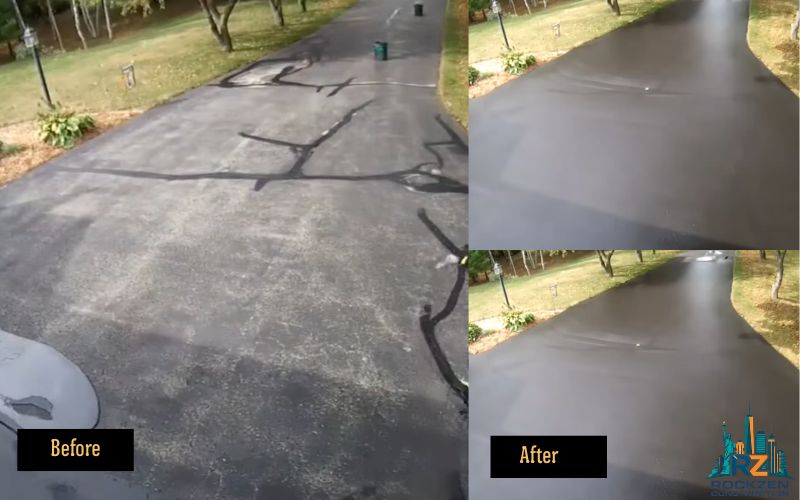
Driveway sealing applies a protective asphalt or acrylic coating to residential and commercial driveways. The coating restores the dark black surface finish. Sealant prevents water infiltration, UV oxidation, and chemical damage.
New York contractors use three sealant types. Selection depends on traffic volume, surface condition, and NYC environmental codes.
Sealant applies at one eighth inch (3.18 mm) thickness on a clean, prepared surface. Each coat cures overnight before the next coat applies. Full cure strength develops in 3 to 5 days (72 to 120 hours) under normal New York weather conditions.
Six visible conditions indicate an asphalt or concrete driveway in New York needs sealing. Early sealing prevents driveway resurfacing, which costs 10 to 30 times more than sealcoating. The table below shows each condition, what it indicates, and the correct response.
| Condition | Indicates | Correct Response |
|---|---|---|
| Gray surface color | UV oxidation has broken down the asphalt binder | Sealcoating restores the deep black finish |
| Hairline cracks under 1/8 inch (3.18 mm) | Surface stress from thermal expansion | Hot pour crack filler followed by sealcoating |
| Medium cracks 1/8 to 1/4 inch (3.18 to 6.35 mm) | Structural stress penetrating the surface layer | Hot pour crack filler set and cured before sealcoating |
| Water absorbing into the surface | Waterproof sealant barrier has failed | Immediate sealcoating restores water beading protection |
| Oil stains penetrating the surface | Protective coating has worn through | Degreasing and sealcoating restores chemical resistance |
| Potholes over 1 inch (25.4 mm) | Structural base damage requiring repair | Resurfacing or patching before sealcoating |
Driveway sealing works only on surface level conditions. Large potholes and structural base failure require driveway resurfacing before any sealcoating begins.
Rockzen Construction provides driveway sealing services across all five NYC boroughs. Services cover residential, commercial, and industrial properties.
Every project uses commercial grade sealants matched to driveway type, traffic loading, and NYC regulatory requirements. Every project includes full surface preparation and a written maintenance schedule.
Residential driveway sealing extends asphalt lifespan and restores a deep black surface finish. Rockzen Construction applies asphalt emulsion sealants on single family homes, multi family buildings, and co-op properties. Asphalt emulsion provides flexible, UV-resistant protection under New York’s seasonal conditions.
Commercial parking lot sealing protects high traffic asphalt and concrete surfaces for businesses and shopping centers. Rockzen Construction uses commercial grade rubberized emulsions with high pressure cleaning equipment on every commercial project. Two coat application is standard on commercial surfaces. Three coats apply in high traffic areas.
Hot pour crack filling seals surface cracks up to 1 inch (25.4 mm) wide before sealcoating begins. Crack treatment prevents water infiltration and structural deterioration before the sealant layer applies. Cracks wider than 1 inch (25.4 mm) require driveway patching or resurfacing before any sealcoating proceeds.
Our team cleans the whole driveway first. We use industrial blowers, wire brooms, and chemical degreasers. Then, apply the sealant. Pressure washing at a minimum of 3,000 PSI (207 bar) removes deep seated dirt, algae, and loose surface material. Correct surface preparation determines sealant adhesion quality and longevity.
Rockzen Construction driveway sealing follows five sequential steps from initial inspection to the final curing process. Each step helps sealant stick better. This protects asphalt and concrete driveways for a long time.
Rockzen Construction experienced estimators inspect the full driveway surface to determine whether the driveway needs sealing, crack repair, resurfacing or full driveway replacement before starting the sealing process. Rockzen gives inspection services free of cost to New Yorkers.
Driveway cleaning follows four sequential stages. A backpack blower removes loose dirt and debris. A heavy duty chemical degreaser removes oil stains, grease, and gasoline residue.
Pressure washing at minimum 3,000 PSI (207 bar) removes deep seated dirt, algae, moss, and loose asphalt. The surface dries completely before sealant application begins.
Hot pour crack filler addresses surface cracks up to 1 inch (25.4 mm) wide. The filler applies at 375 degrees Fahrenheit (190 degrees Celsius) and cures in 30 to 60 minutes. Cracks wider than 1 inch (25.4 mm) require resurfacing or patching before sealcoating proceeds.
Sealant mixes with a drill mounted paddle to ensure consistent blend throughout the material. Driveway edges and drainage channels are secured before application begins. The brush method applies sealant along edges, curbs, and garage doors for clean, precise lines.
The first sealant coat applies at one eighth inch (3.18 mm) thickness and cures overnight. The second coat applies on day two. The second coat strengthens protection against UV damage, oxidation, and traffic wear.
Rockzen protects the sealcoating surface with caution tape from foot or vehicle traffic. Sealant gets enough time with this protection to cure properly.
Curing time: Driveway surface dries in 24 to 48 hours and reaches full cure strength in 3 to 5 days(72 to 1120 hours). Foot traffic is allowed after 24 hours and vehicle traffic at least after 48 hours under normal New York weather conditions. Rockzen inspects the finished driveway and gives each client a written driveway maintenance schedule after every project. Maintenance schedule for driveways help clients to take good care of their driveways
Residential driveway sealing in New York costs 0.14 to 0.25 dollars per square foot (1.50 to 2.69 dollars per square meter). Commercial properties and parking lots cost 0.20 to 0.85 dollars per square foot (2.15 to 9.15 dollars per square meter).
Acting before structural damage develops keeps costs at the sealing rate. Resurfacing costs 10 to 30 times more than sealcoating.
Five factors determine the total project cost:
Driveway resurfacing costs 3 to 7 dollars per square foot (32 to 75 dollars per square meter). Regular sealing every 2 to 3 years prevents the need for early resurfacing.
| Driveway Size | Square Meters | Estimated Cost |
|---|---|---|
| 400 sq ft (37.16 sq m) | 37 sq m | $56–$100 |
| 600 sq ft (55.74 sq m) | 56 sq m | $85–$150 |
| 800 sq ft (74.32 sq m) | 74 sq m | $112–$200 |
| 1,000 sq ft (92.90 sq m) | 93 sq m | $140–$250 |
| 1,500 sq ft (139.35 sq m) | 139 sq m | $210–$375 |
The best time to seal a New York driveway is late spring through early October. May through early October delivers the sustained temperatures required for proper sealant bonding.
Driveway sealcoating requires temperatures above 50 degrees Fahrenheit (10 degrees Celsius) and humidity below 90 percent. Temperature below 40 degrees Fahrenheit (4.4 degrees Celsius) prevents sealant from bonding.
| Season | Window | Conditions |
|---|---|---|
| Late Spring | May to June | Optimal. Temperatures rise steadily after winter. |
| Summer | July to August | Apply in morning hours to avoid heat above 90°F (32°C). |
| Early Fall | September to October | Last viable window before winter temperature drops. |
| Winter | November to April | Not recommended. Temperatures below 40°F (4.4°C) prevent bonding. |
Existing asphalt driveways require sealing every 2 to 3 years. Concrete driveways require sealing every 3 to 5 years.
High-traffic driveways require sealing every 1 to 2 years. Driveways with heavy winter salt exposure also require sealing every 1 to 2 years.
| Driveway Type | Recommended Sealing Interval | First Sealing |
|---|---|---|
| New asphalt driveway | Every 2 to 3 years | 6 to 12 months after installation |
| Existing asphalt driveway | Every 2 to 3 years | When surface shows gray oxidation or hairline cracks |
| Concrete driveway | Every 3 to 5 years | After 28-day cure period |
| High traffic or heavy salt exposure | Every 1 to 2 years | Same as existing asphalt |
Sealing more than once per year causes sealant buildup, surface softening, and premature peeling. Sealing less often than every 3 years allows UV oxidation to accelerate surface deterioration. Water infiltration follows and shortens driveway lifespan significantly.
Rockzen Construction provides professional driveway sealing across all five NYC boroughs. Every project uses commercial-grade sealants and licensed application crews.
Every project includes full surface preparation, crack treatment, and a written maintenance schedule. Every project carries a written completion guarantee.
Driveway sealcoating costs a fraction of resurfacing. Every year without sealing brings New York freeze-thaw cycles closer to structural damage. Handle it now, before the cracks require a contractor instead of a squeegee.
Regular driveway sealing every 2 to 3 years extends asphalt lifespan by 50 percent. The Pavement Coatings Technology Council (PCTC) confirms this rate across residential and commercial properties.
A preventive sealing schedule saves 60 to 80 percent in long-term pavement costs. Six specific protections explain why sealing is essential in New York.
Waterproofing: Sealcoating creates a non-porous shield across the driveway surface. Water beads on the surface instead of seeping into cracks. Waterproofing protection prevents freeze-thaw expansion damage during New York winters.
Lifespan Extension: Sealcoating prevents crack formation and extends driveway lifespan by 2 to 5 years per application. Skipping sealing reduces asphalt service life from 20 to 30 years down to 10 to 15 years.
UV Protection: Constant sun exposure oxidizes asphalt binder and produces gray, brittle surfaces. Sealcoating blocks UV penetration and preserves asphalt flexibility. Unsealed driveways develop visible UV oxidation within 2 to 3 years.
Chemical Resistance: De-icing salts, oil spills, and gasoline break down asphalt binders. Sealcoating prevents these chemicals from penetrating the surface. Chemical resistance protects driveway structural integrity through New York winters.
Freeze-Thaw Protection: New York temperatures drop below 32 degrees Fahrenheit (0 degrees Celsius) for up to 100 days per year. Water seeping into unsealed cracks freezes and expands, widening surface damage each winter. Sealcoating eliminates water infiltration before freeze-thaw cycles begin.
Appearance: Sealcoating restores the deep black finish of oxidized and faded driveways. Fresh surface finish enhances curb appeal and property presentation. Sealed driveways maintain a clean, uniform appearance between maintenance cycles.
Driveway sealcoating lasts 2 to 3 years depending on traffic, weather exposure, and maintenance. Regular sealing every 2 to 3 years prevents cracking, fading, and water infiltration between applications.
No. October sealing works when temperatures stay consistently above 50 degrees Fahrenheit (10 degrees Celsius) during application and cure. Temperature below 40 degrees Fahrenheit (4.4 degrees Celsius) prevents proper bonding and reduces sealant durability.
Sealed driveway surfaces require a minimum 48-hour wait before vehicle traffic. Foot traffic is allowed after 24 hours. Full cure strength develops in 3 to 5 days under normal New York weather conditions.
Driveway sealcoating covers only hairline cracks under one-eighth inch (3.18 mm). Medium cracks from one-eighth to one-quarter inch (3.18 to 6.35 mm) require hot pour crack filler before sealcoating. Cracks over one-quarter inch (6.35 mm) and potholes require patching or resurfacing before sealcoating.
Residential sealcoating costs 0.14 to 0.25 dollars per square foot (1.50 to 2.69 dollars per square meter). Commercial sealcoating costs 0.20 to 0.85 dollars per square foot (2.15 to 9.15 dollars per square meter). Total cost depends on driveway size, condition, sealant type, and number of coats required.
Existing asphalt driveways require sealing every 2 to 3 years. Concrete driveways require sealing every 3 to 5 years.
High-traffic driveways require sealing every 1 to 2 years. Driveways with heavy winter salt exposure also require sealing every 1 to 2 years.