Rockzen Construction is a licensed NYC window lintel contractor. We repair and replace corroded steel lintels on brownstones, apartments, and commercial buildings. Every project meets NYC DOB standards with full permit filing and a written completion guarantee.
A window lintel is the horizontal structural beam above a window or door opening. It carries the load of the wall above and transfers it to the masonry on either side. Most NYC buildings use steel lintels installed between the 1880s and 1970s.
Steel lintels fail through corrosion. Water enters through failed mortar joints and reaches the steel. Rust forms, expands, and cracks the brick above the window. This process is called rust jacking.
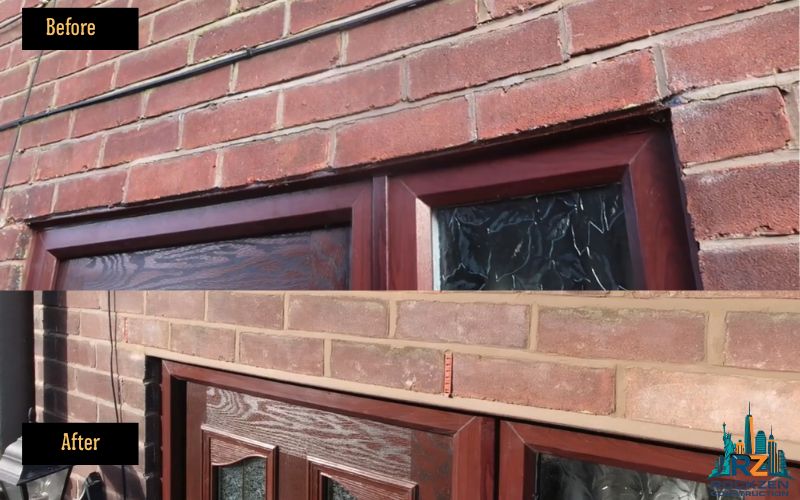
Window lintel failure traces to five main causes on NYC buildings. Each cause has a different progression rate. Deteriorated lintels rank among the top 5 causes of NYC facade violations under Local Law 11 FISP.
Water infiltration reaching embedded steel lintels triggers electrochemical corrosion. Failed mortar joints above window openings allow direct water access to lintel steel bearing zones. Corroding steel loses structural capacity reducing load-bearing performance by up to 40% before visible exterior cracking appears.
Flashing systems installed behind lintel bearing zones prevent water from reaching steel. Missing or deteriorated flashing represents the primary cause of steel lintel corrosion in NYC masonry buildings.
NYC experiences over 100 freeze-thaw cycles annually between November and March. Water trapped inside mortar joints above lintels expands 9% in volume when freezing. That expansion fractures mortar and brick around lintel bearing zones from inside.
Repeated freeze-thaw cycling progressively loosens brick courses above window openings. Loose brick shifts the structural load onto already-corroded lintel steel accelerating failure timeline.
Rust jacking occurs when corroding steel expands inside masonry walls. Steel corrosion products occupy up to 10 times the original steel volume. That volumetric expansion exerts outward pressure on surrounding brick and mortar.
The outward pressure produces horizontal crack lines running directly above window openings across NYC building facades. Rust jacking-induced brick expansion is the most visible sign of active steel lintel corrosion in NYC masonry buildings.
Steel lintels installed without proper flashing systems lack waterproofing protection at bearing zones. Original construction practices before 1960 frequently omitted through-wall flashing behind lintel bearing points. Missing end dams at lintel bearing zones allow water to travel horizontally along the lintel bottom flange reaching the embedded steel bearing zone.
Improper end dam installation allows water that enters the wall cavity to collect at lintel bearing points rather than drain outward. Drainage failure accelerates corrosion rates at the most structurally critical lintel locations.
Rockzen provides six window lintel services for NYC residential, commercial, and landmark buildings. Every service is performed by licensed masons meeting NYC DOB and Local Law 11 FISP standards.New York driveways deteriorate from five primary causes. Each cause produces distinct damage patterns on asphalt and concrete surfaces.
Rockzen Construction offers full lintel replacement. We remove corroded steel and install a new lintel. This applies when corrosion has compromised the load-bearing capacity of the beam.
Repair addresses surface corrosion and moderate section loss. Rust removal, protective coating, and plate reinforcement restore lintel function without full replacement.
Rust jacking cracks the surrounding brick as the lintel expands. Restoration includes lintel work plus repointing and brick replacement above the window opening.
Landmark buildings need matching materials and LPC approval. Historic specialists preserve original decorative lintels using period-correct methods.
Unsafe lintel conditions require immediate response within 24 hours. Emergency sidewalk sheds protect pedestrians while permanent repair planning begins.
Lintel work often ties into facade repointing and brick replacement. Rockzen coordinates all masonry work under one project scope and one DOB filing.
Window lintel repair follows six sequential steps from assessment to final inspection. Licensed masons manage every step. Property owners have no direct city agency contact throughout the project.
NYC window lintel replacement costs range from $1,500 to $4,000 per standard single window opening, depending on the scope of work, access requirements, and building type. Full brick rebuilding above failed lintels can add $3,000 to $8,000 per opening. Commercial or multi-family buildings with failed lintels may cost $3,000 to $8,000 or more per opening, depending on building height and the total number of openings.
| Project Scope | Cost Range (Per Window) | What Is Included? |
|---|---|---|
| Minor Repair | $500 – $1,200 | Scraping rust, priming, applying protective paint, localized mortar repair. |
| Standard Single Replacement | $1,500 – $4,000 | Temporary masonry shoring, removing old steel/stone, installing new galvanized steel lintel, and brick reconstruction. |
| Complex Structural / High-Rise | $3,000 – $8,000+ | Large window spans, extensive masonry damage reconstruction, structural engineer sign-off, and heavy shoring. |
The table below shows seven primary cost factors for NYC Local Law 11 projects.
| Cost Factor | Lower Cost | Higher Cost |
|---|---|---|
| Building height | Under 4 stories | 15 plus stories |
| Access method | Ground floor ladder access | Full perimeter scaffolding |
| Brick rebuilding scope | No rebuilding required | Full course rebuilding above opening |
| Mortar specification | Standard Portland mix | Custom lime mortar formulation |
| Landmark status | Standard DOB permit | LPC approval and historic material sourcing |
| Window opening width | Under 3 feet (0.9 meters) | Over 6 feet (1.8 meters) |
| Emergency classification | Standard permit timeline | Expedited Unsafe condition response |
NYC window lintel work takes 3 days to 6 weeks depending on scope and permits. Single-window repair completes in 2 to 3 days after permit approval. Full-building lintel replacement takes 4 to 6 weeks. Emergency response begins within 24 to 72 hours.
| Scope of Work | Estimated Timeline | Key Factors / Description |
|---|---|---|
| Minor Surface Repair / Painting | 4–8 hours (1 day) | Best for light corrosion and surface deterioration where the existing lintel remains structurally sound. |
| Single Lintel Replacement | 2–3 days per opening | Typically involves temporary support, removal of the damaged lintel, installation of a new member, and restoration of surrounding masonry. |
| Multi-Window / Full Building Project | Several weeks to months | Larger projects require coordinated access, multiple openings, staging or scaffolding, inspections, and scheduling around site conditions. |
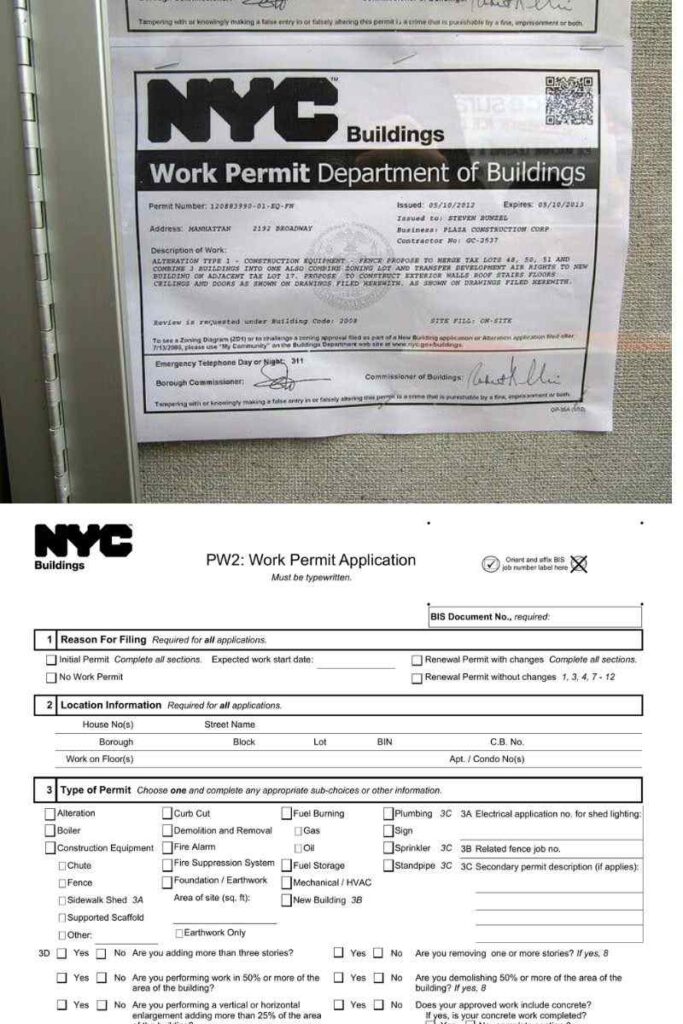
In NYC, you need permits from the Department of Buildings for most window lintel repairs. Sidewalk sheds and landmark approvals add extra requirements. A DOB-registered contractor files all applications for the property owner.
The DOB requires an alteration permit for structural lintel work. Standard processing takes 2 to 4 weeks. Expedited processing runs 5 to 10 business days for additional fees.
Sidewalk shed permits protect pedestrians during window-level lintel work. Unsafe classifications require sheds within 24 hours of QEWI filing.
Landmark Preservation Commission districts need LPC permits before lintel work begins. LPC requires matching materials and period-correct restoration methods.
Lintel repair is appropriate for isolated corrosion and minor structural deterioration. Full replacement is required when corrosion has compromised structural load-bearing capacity across the full lintel span. The decision between repair and replacement depends on 4 structural assessment criteria.
| Assessment Criteria | Lintel Repair | Full Lintel Replacement |
|---|---|---|
| Corrosion | Less than 25% of cross-section affected | More than 25% of original cross-section compromised |
| Deflection | No visible sagging or deflection | Deflection exceeds 0.5 inches (1.27 cm) |
| Bearing Zones | Both ends remain structurally sound | Bearing failure or loss of support |
| Masonry Condition | Localized brick and mortar deterioration | Brick displacement or widespread deterioration |
| Structural Capacity | Load-bearing capacity remains adequate | Structural assessment confirms capacity loss |
| Typical Scope | Rust treatment, mortar repair, flashing, and waterproofing | Shoring, demolition, lintel removal, new steel, brick rebuilding, and waterproofing |
| Expected Service Life | 15 to 25 additional years | 40 to 60 years with proper maintenance |
Local Law 11, also known as FISP, requires NYC buildings over six stories to inspect facades every five years. Failed lintels are among the top 5 causes of facade violations. NYC DOB classifies lintel defects as Safe, SWARMP, or Unsafe in each FISP cycle.
QEWI engineers identify failed lintels during hands-on facade inspection. Defects flagged SWARMP need repair before the next FISP filing deadline. Unsafe defects must sidewalk sheds within 24 hours.
SWARMP means Safe With A Repair and Maintenance Program. SWARMP lintel work must complete before the next FISP sub-cycle deadline. Early SWARMP repair costs 60 to 80 percent less than waiting for Unsafe.
Unsafe lintel conditions require immediate action. Property owners face $1,000 monthly penalties plus shed fees until repairs complete. Rockzen provides 24-hour emergency response across all 5 boroughs.
Rockzen Construction provides free on-site window lintel assessment across all 5 NYC boroughs. Every project includes DOB permit filing, licensed masonry work, and a written completion guarantee. Contact Rockzen today to book your assessment or request emergency response.