
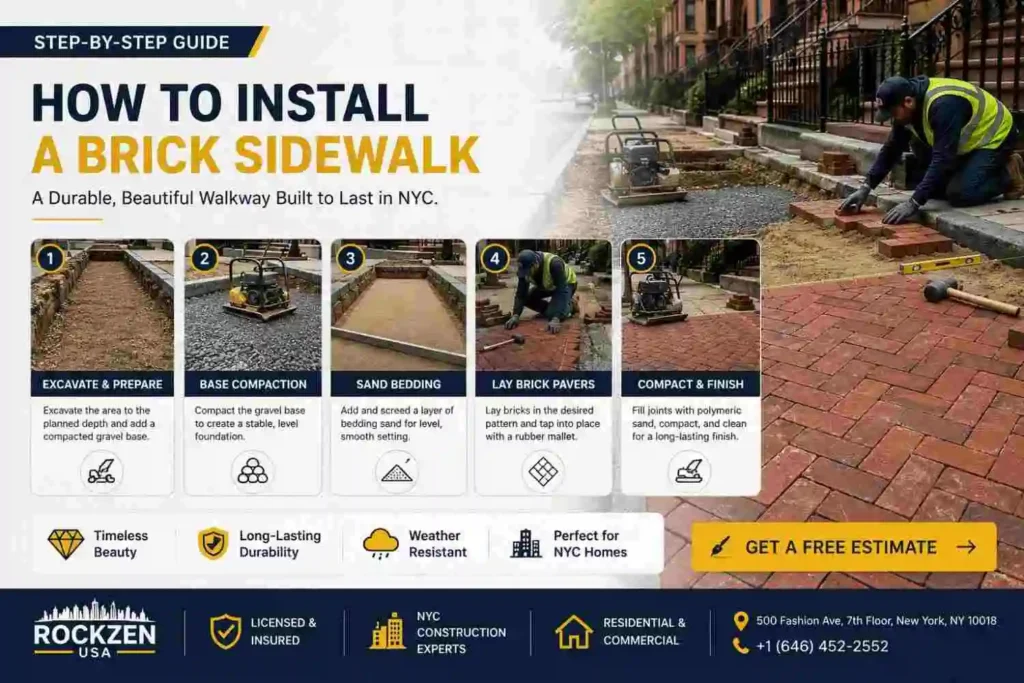
To install a brick sidewalk, follow seven core steps from excavation to sealing. Each step builds on the one before it. The base work matters most for a long-lasting result.
- Excavate the area to the planned base depth
- Lay geotextile fabric over the soil
- Add and compact a gravel base
- Spread and level a sand bedding layer
- Lay the brick pavers in your chosen pattern
- Compact the surface with a plate compactor
- Sweep polymeric sand into the joints and seal
What Is a Brick Sidewalk and How Is It Installed?
A brick sidewalk is a walkway built from individual brick pavers. Clay brick and concrete brick are the two main types. Rockzen Construction provides professional masonry and sidewalk services for NYC property owners, including brick sidewalk installation and repair. Installation follows one of two methods. Sand-set places pavers on compacted gravel and sand. Mortar-set bonds pavers to a concrete base.
Brick Sidewalk and Concrete Sidewalk Difference
Concrete pours as one solid slab. Brick uses individual units with joints between them. Joints let water drain through naturally. A single cracked brick can be replaced alone.
Brick Paver, Clay Brick, and Concrete Brick
Brick paver is the general term for these units. Clay brick is fired from natural clay. Concrete brick is cast from cement and aggregate.
Sand-Set and Mortar-Set Overview
Sand-set, also called dry-lay, sits on gravel and sand. No mortar holds the pavers in place. Mortar-set bonds pavers to a concrete base. Most residential projects use sand-set installation.
How Do You Plan a Brick Sidewalk Installation?
Planning starts with measuring the walkway area. Width, brick type, and permit rules all factor in. Confirm these details before buying material. Skipping this step leads to waste and rework.
Measuring the Walkway Area
Measure the full length and width of the walkway. Multiply for total square footage. Add ten percent for cuts and waste.
Width Guidelines
A walkway should allow comfortable two-person passage. Thirty-six inches is a common minimum width. Public walkways may need to meet accessibility standards.
Choosing Brick Type and Size
Standard brick pavers run about four by eight inches. Thicker pavers handle vehicle traffic on a driveway. Paver size also affects pattern options.
What Is the Best Brick for Freeze-Thaw Climates?
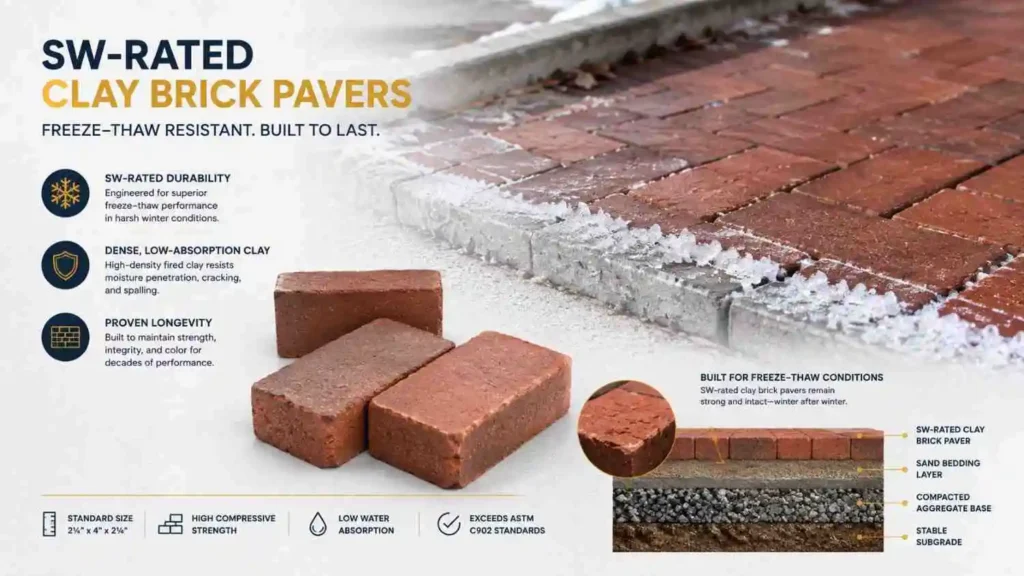
Clay brick rated for severe weathering is the best choice for cold climates. Brick graded SW resists freeze-thaw cycles without spalling. Concrete brick and permeable pavers also work, with tradeoffs.
Clay Brick Properties
SW-rated clay brick has very low water absorption. This resists frost heave and surface spalling. It holds color permanently through the full brick.
Concrete Brick Compared to Clay Brick
Concrete brick costs less upfront. It can fade over time with sun exposure. Clay brick costs more but keeps its color for decades.
Permeable Pavers for Drainage
Permeable pavers let water pass through to the base. This reduces surface runoff. They suit low spots that collect standing water.
Freeze-Thaw Resistance in Selection
Cold winters bring repeated freeze and thaw cycles. Water trapped in low-grade brick expands when frozen. SW-rated clay or dense concrete brick avoids this.
How Deep Should a Brick Sidewalk Base Be?
A brick sidewalk base should be four to six inches deep for most installs. Cold climates with deep frost lines may need eight to twelve inches. Base depth depends on soil, climate, and traffic.
Base Depth for Light Foot Traffic
A garden path needs less base. Four inches of compacted gravel is often enough. This applies to light foot traffic only.
Base Depth for Cold Climates
Cold-climate soil can freeze twelve to eighteen inches deep. A six-inch gravel base reduces frost heave risk. Match base depth to local frost depth.
Base Depth on Sloped Ground
Sloped walkways need extra base on the downhill side. This keeps the finished surface level. Uneven base depth causes future settling.
How Do You Excavate the Area for a Brick Sidewalk?
Excavating means digging soil to the planned base depth. Mark the walkway edges first with stakes and string. Remove all grass, roots, and loose soil. Dig slightly wider than the finished walkway.
Marking and Layout
Outline the walkway with stakes and mason’s string. Mark curves with a garden hose. Spray paint can mark the final cut.
Excavating to Depth
Dig to the depth set for your climate. Keep the excavation consistent across the length. A flat-bottomed trench makes base work easier.
Handling Slopes
On sloped yards, dig deeper at the low end. This keeps base depth consistent throughout. A level line tracks depth across the slope.
What Do You Put Under a Brick Sidewalk?
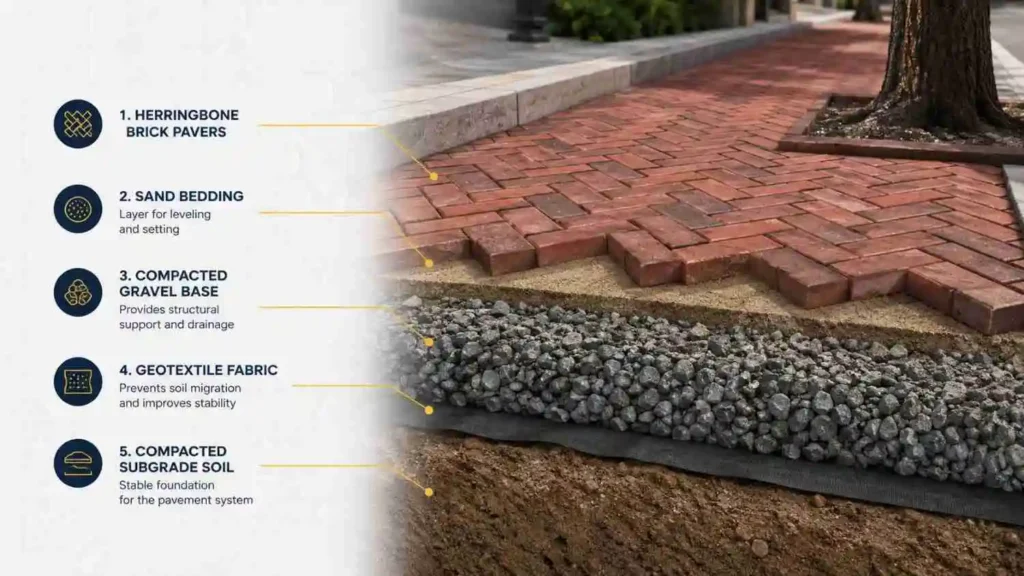
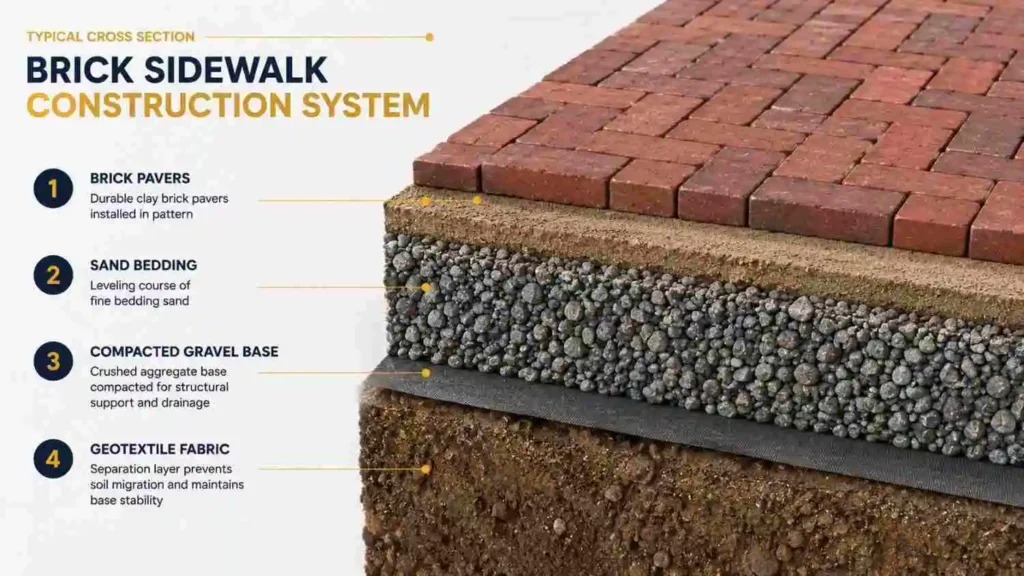
A brick sidewalk needs three layers underneath. Geotextile fabric goes down first, against the soil. Compacted gravel sits on the fabric. A sand bedding layer goes on top.
Compacted Gravel Base
Crushed gravel forms the structural base. A plate compactor compacts it in lifts. Each lift should be two inches or less.
Geotextile Fabric
Geotextile fabric separates soil from the gravel. It stops soil from mixing into the base. It also blocks most weed growth from below.
Sand Bedding Layer
A one-inch bedding layer sits under each paver. Coarse sand compacts tighter than fine sand. This layer creates the smooth setting surface.
What Each Layer Does
Gravel handles drainage and load-bearing strength. Sand creates a smooth setting bed. Both layers work together, not as alternatives.
How Do You Ensure Proper Drainage for a Brick Sidewalk?
Proper drainage moves water away from the walkway. Grade the gravel base with a slight slope. A one to two percent grade is standard. Without it, water pools under the brick.
Slope and Grade for Runoff
Slope the surface away from the house. A two percent grade drops two inches over ten feet. This small slope moves surface water well.
Permeable Paver Drainage
Permeable pavers drain straight through the surface. Water reaches an open-graded base below. This design suits spots that collect water.
How Do You Lay the Brick and Finish the Joints?
Lay pavers in your chosen pattern on the sand bed. Keep joints tight and consistent. Compact the surface after laying. Then sweep polymeric sand into the joints.
Choosing a Brick Pattern
Running bond is the simplest pattern to lay. Herringbone locks tightly and resists shifting. Basket weave gives a traditional look.
Laying and Cutting Brick
Set each paver firmly into the sand bed. Seat it level with a rubber mallet. Cut edge pavers to fit with a masonry saw.
Compacting and Jointing
Run a plate compactor over the laid surface. Sweep polymeric sand across the joints. Mist lightly to activate the sand.
How Much Does a Brick Sidewalk Cost?
A brick sidewalk costs $15 to $30 per square foot installed. A standard 100-square-foot walkway runs $1,500 to $3,000. Small projects start near $450. Large projects can reach $14,000.
Cost by Project Size
| Project Size | Cost Range |
|---|---|
| 50 sq ft garden path | $750 – $1,500 |
| 100 sq ft standard sidewalk | $1,500 – $3,000 |
| 150 sq ft medium walkway | $2,250 – $4,500 |
| 250 sq ft large sidewalk | $3,750 – $7,500 |
Cost by Brick Type
| Brick Type | Cost Per Sq Ft |
|---|---|
| Concrete brick pavers | $8 – $16 |
| Clay brick pavers | $10 – $24 |
| Reclaimed and veneer brick | $17 – $25 |
Concrete brick is the most budget-friendly option. Clay brick costs more but lasts decades. Reclaimed brick carries a premium for character.
Labor and Site Costs
| Cost Component | Range |
|---|---|
| Installation labor | $6 – $16 per sq ft |
| Masonry and contractor labor | $50 – $100+ per hour |
| Old sidewalk demolition | $0.30 – $0.50 per sq ft |
| Excavation and leveling | $2 – $5 per sq ft |
| Gravel base material | $25 – $80 per cubic yard |
| Leveling sand | $15 – $60 per cubic yard |
| Sidewalk permits | $50 – $200 |
What Drives the Final Price
- Brick type, from budget concrete to premium reclaimed
- Total square footage of the walkway
- Site prep, including demolition and excavation
- Local labor rates
- Permit costs where required
Brick Cost Compared to Poured Concrete
| Surface | Upfront Cost | Long-Term Value |
|---|---|---|
| Brick | $15 – $30 per sq ft | Easy spot repairs |
| Poured concrete | Lower upfront | Full-slab repairs |
Brick costs more upfront than poured concrete. Brick often saves money over time. Individual bricks can be reset or replaced.
How Long Does a Brick Sidewalk Last?
A properly installed brick sidewalk lasts fifty years or longer. The brick rarely wears out under normal use. Joint sand and base materials need upkeep. Poor base prep is the main cause of early failure.
Lifespan of Sand-Set Brick
Sand-set brick lasts decades with joint maintenance. Individual pavers can be reset if they shift. This flexibility beats rigid surfaces.
Lifespan of Mortar-Set Brick
Mortar-set brick lasts as long as its concrete base. If the base cracks, the brick cracks too. Base quality is critical here.
How Do You Maintain a Brick Sidewalk?
Brick maintenance is light compared to concrete. Reapply joint sand every few years. Clean and reseal the surface periodically. Good habits now prevent bigger repairs later.
Preventing Weeds Between Bricks
Polymeric sand blocks most weed growth. Sweep in fresh sand where joints look low. Pull any weeds before they root.
Cleaning and Sealing
Sweep and rinse the surface seasonally. A penetrating sealer resists stains and salt. Reapply sealer every two to three years.
Winter Care
Avoid rock salt on sealed brick. Salt speeds surface wear and breaks down sealer. Sand gives traction without chemical damage.
How Do You Repair a Damaged Brick Sidewalk?
Sidewalk repairs in NYC are usually local, not full replacements. A sunken brick gets lifted and reseated. A cracked brick gets replaced alone. Most small repairs take a single afternoon.
Resetting Sunken Bricks
Lift the affected brick carefully. Add or remove bedding sand to fix the height. Reset the brick and check level.
Replacing Cracked Bricks
Remove the cracked brick and clean the gap. Match a replacement to the pattern. Set it in fresh sand and refill joints.
Re-Leveling After Frost Movement
Yearly movement points to a base problem. Our guide to repairing an uneven sidewalk explains how to identify and fix common causes of uneven pavement.
What Do People Ask About Brick Sidewalk Installation?
Can you lay brick directly on soil?
No. Bricks shift and sink within a season. A gravel and sand base prevents this.
Do brick sidewalks need a concrete base?
No, not for sand-set installation. Sand-set sits on gravel and sand. Only mortar-set requires concrete.
What tools do you need to lay a brick sidewalk?
Basic tools are a shovel, plate compactor, and rubber mallet. A masonry saw cuts pavers to fit. A level and string line keep it straight.
Can brick be set into a lawn?
Yes, as stepping pavers set into grass. Each brick sits in its own pocket. Grass grows to the edges naturally.
Which brick pattern is strongest?
Herringbone locks tightest and resists shifting. It suits walkways and driveways. Running bonds is easier but shifts more.
Ready to Install a Brick Sidewalk?
Rockzen Construction helps NYC property owners with professional brick sidewalk installation from preparation and excavation to proper base installation, brick placement, leveling, and finishing. Every project starts with a free on-site assessment to determine the right installation approach for your property. You receive a written cost estimate with clear project details and next steps. Most assessments are booked within 48 hours.