
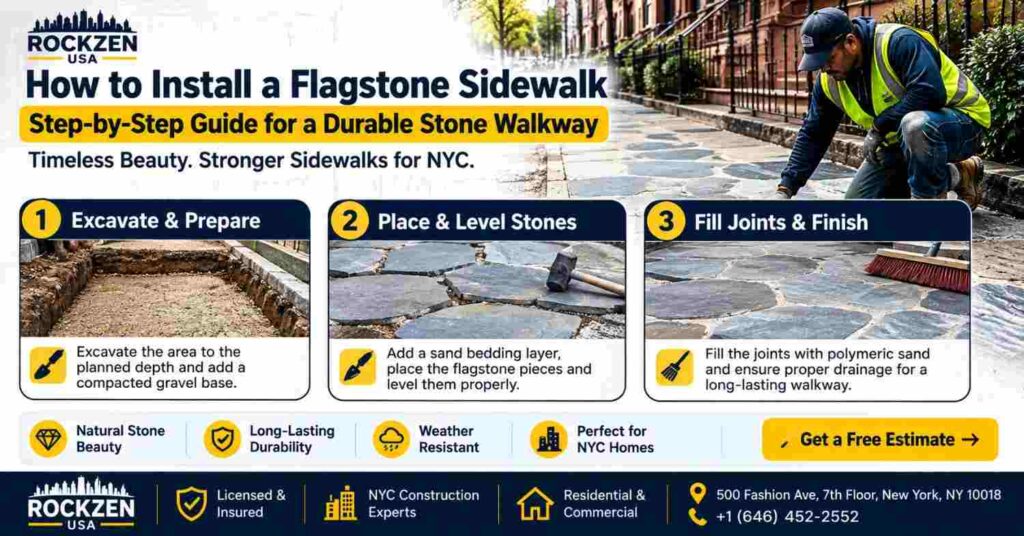
To install a flagstone sidewalk, excavate the area to the planned depth. Add a compacted gravel base, then a sand bedding layer. Place and level the flagstone pieces. Fill the joints with polymeric sand. Proper drainage and frost-heave protection determine how long the walkway lasts.
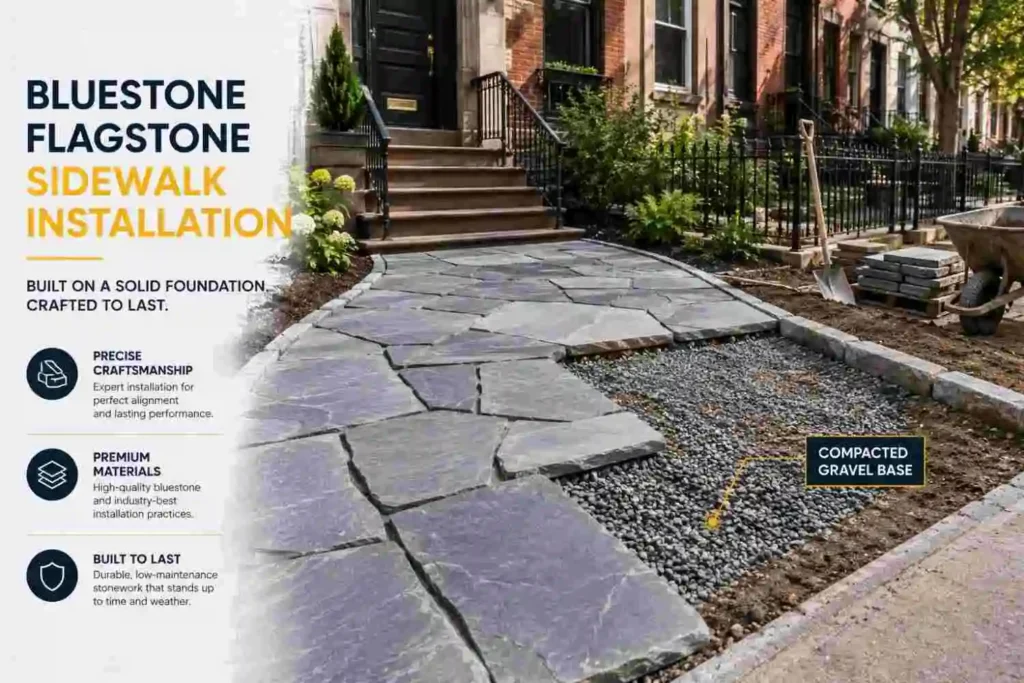
What Is a Flagstone Sidewalk and How Is It Installed?
A flagstone sidewalk is a stone walkway built from flat natural stone pieces. Bluestone, sandstone, and limestone are the most common choices. Installation follows one of two methods. Dry-laid installation sets stones into a gravel and sand base. Mortar-set installation bonds stones to a concrete base. Both methods create a durable hardscape surface for pedestrian traffic.
Flagstone vs Bluestone vs Other Natural Stone
Flagstone is a general term for flat paving stone. Bluestone is one specific type of flagstone. Sandstone and limestone are other common types. Bluestone dominates NYC walkways for good reason.
Flagstone Sidewalk vs Concrete Sidewalk
Concrete sidewalks are poured as one solid slab. Flagstone sidewalks use individual stone pieces with joints between them. Joints allow water to drain through. Concrete relies on expansion joints placed every few feet instead.
Dry-Laid vs Mortar-Set Installation Overview
Dry-laid flagstone, also called mortarless flagstone, sits on gravel and sand. No mortar holds the stones in place. Mortar-set flagstone bonds permanently to a concrete base, closer to traditional stone masonry. Most NYC DIY projects use the dry-laid method.
How Do You Plan a Flagstone Sidewalk Installation?
Planning a flagstone sidewalk installation starts with measuring the walkway area. Width requirements, permit rules, and stone thickness all factor into the plan. A DIY homeowner should confirm these details before ordering materials. Skipping this step leads to wasted stone and wasted money.
Measuring the Walkway Area
Measure the full length and width of the planned walkway. Multiply these numbers for total square footage. Add ten percent for cuts and waste.
ADA Walkway Width Requirements
A residential flagstone sidewalk should allow comfortable two-person passage. Thirty-six inches is a common minimum width. Public-facing walkways may need to meet Americans with Disabilities Act (ADA) standards.
NYC Sidewalk Permit Requirements
Sidewalk work in the public right of way often needs a permit. New York City’s local building department issues these DOB permits. Always check before breaking ground on a front yard project.
Choosing Flagstone Thickness
Walkway flagstone should be one to two inches thick. Thicker stone resists cracking under foot traffic. Thinner stone works for mortar-set installations over concrete.
What Is the Best Stone for a Flagstone Sidewalk in Cold Climates?
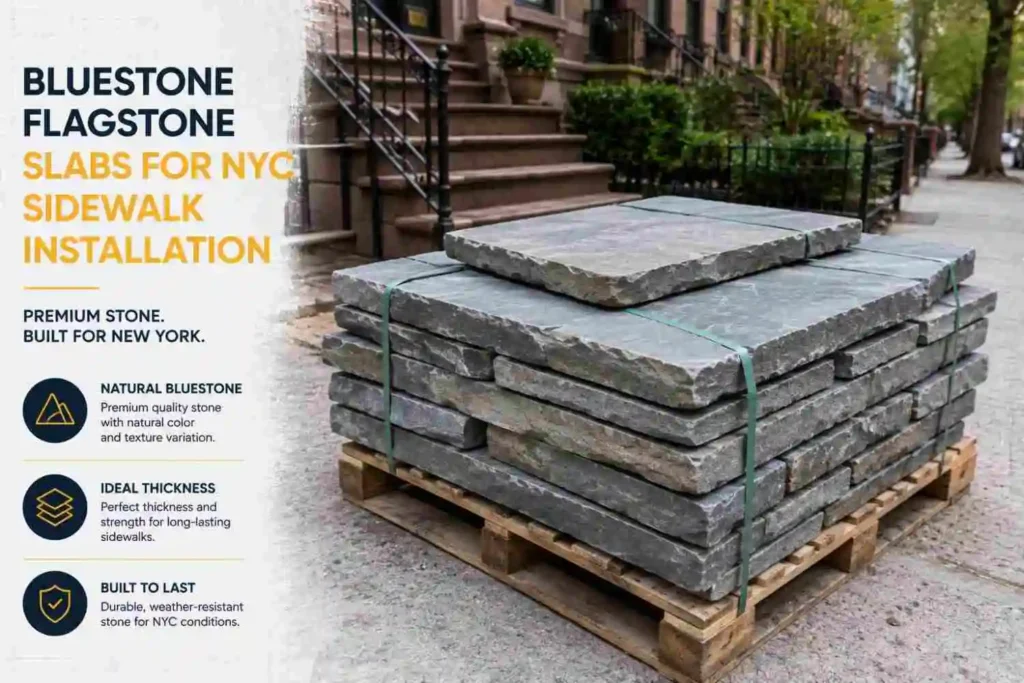
Bluestone is the best flagstone for cold climates like New York. Its dense composition resists freeze-thaw damage better than softer stones. Sandstone and limestone work too, but absorb more water. Water absorption is what causes stone to crack in winter.
Bluestone Properties and Benefits
Bluestone has very low water absorption. This makes it highly resistant to frost heave damage. It also has a natural non-slip surface texture, ideal for a walkway.
Bluestone vs Sandstone Comparison
Bluestone costs more than sandstone per square foot. Bluestone also lasts longer in freeze-thaw climates. Sandstone offers warmer color tones for some homeowners.
Bluestone in NYC Brownstone Sidewalk Design
Bluestone has a long history on NYC brownstone stoops and walkways. Many landmark districts favor bluestone for historical accuracy. A bluestone sidewalk often matches existing brownstone steps.
Freeze-Thaw Resistance in NYC Winters
New York winters bring repeated freeze and thaw cycles. Water trapped in porous stone expands when frozen. Bluestone resists this because it absorbs almost no water.
How Deep Should a Flagstone Walkway Base Be?
A flagstone walkway base should be four to six inches deep for most installations. Cold climates with deep frost lines may need eight to twelve inches. The base depth depends on soil type, climate, and expected foot traffic. Getting this number right prevents frost heave later.
Base Depth for Light Foot Traffic
A garden path or stepping stone area needs less base. Four inches of gravel base is often enough. This applies to light residential foot traffic only.
Base Depth for NYC Freeze-Thaw Conditions
NYC soil experiences frost penetration to roughly twelve to eighteen inches. A six-inch gravel base reduces frost heave risk significantly. The Interlocking Concrete Pavement Institute recommends sizing base depth to local frost depth.
Base Depth on Sloped Ground
Sloped walkways need extra base depth on the downhill side. This keeps the finished surface level despite the slope. Uneven base depth is a common cause of future settling.
How Do You Excavate the Area for a Flagstone Sidewalk?
Excavating a flagstone sidewalk means digging out soil to the planned base depth. Mark the walkway edges first with stakes and string. Remove all grass, roots, and loose soil completely. The excavated area should be slightly wider than the finished walkway.
Marking and Layout
Use stakes and mason’s string to outline the walkway. Mark curves with a garden hose for a natural look. Spray paint can mark the final cut line.
Excavating to the Planned Depth
Dig down to the depth determined earlier for your climate. Keep the excavation consistent across the full walkway length. A flat-bottomed trench makes base installation easier.
Handling Slopes During Excavation
On sloped yards, dig deeper at the low end. This keeps the base depth consistent everywhere. A level line helps track depth across the slope.
What Do You Put Under a Flagstone Sidewalk?
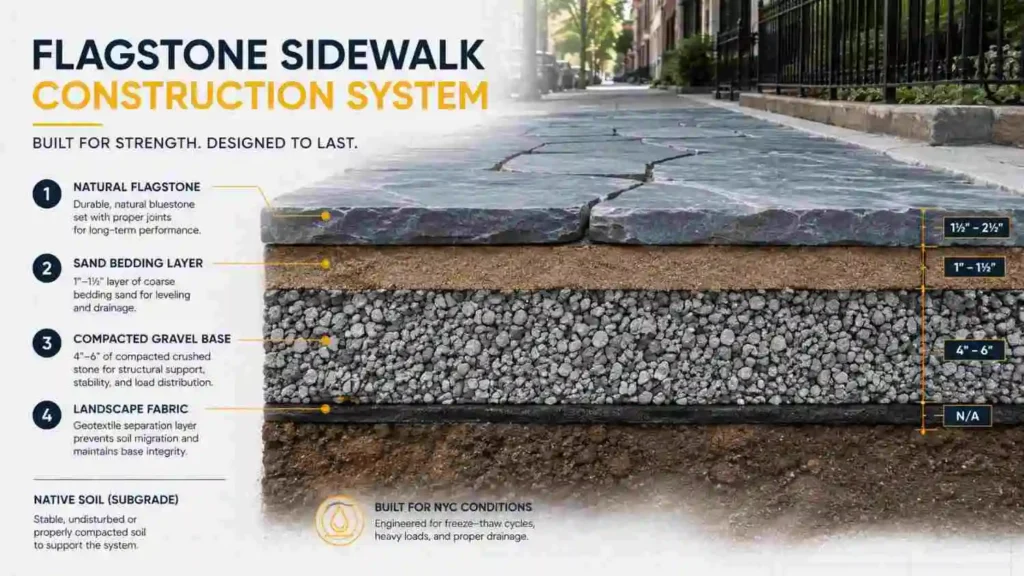
A flagstone sidewalk needs three layers underneath the stone. Landscape fabric goes down first, against the soil. A compacted gravel base sits on top of the fabric. A sand bedding layer, also called sand setting, goes on top of the gravel.
Gravel Base Layer
Crushed gravel forms the structural base of the walkway. A plate compactor compacts this layer in lifts. Each lift should be no more than two inches before compacting.
Landscape Fabric
Landscape fabric separates the soil from the gravel base. This prevents soil from mixing upward into the base. It also blocks most weed growth from below.
Sand or Stone Dust Bedding Layer
A one-inch bedding layer sits directly under each stone. Sand or stone dust both work for this layer. Stone dust compacts tighter and shifts less over time.
Gravel and Sand: Which Layer Does What
Gravel handles drainage and load-bearing strength. Sand or stone dust creates a smooth setting bed. Both layers work together, not as alternatives to each other.
Flagstone Directly on Soil
Laying flagstone directly on soil skips both base layers. Stones shift, sink, and become uneven within a season. Drainage also suffers without a gravel layer underneath.
How Do You Ensure Proper Drainage for a Flagstone Sidewalk?
Proper drainage means water moves away from the walkway, not under it. Grade the gravel base with a slight slope. A one to two percent grade is standard for walkways. Without drainage, water pools under the stone and causes frost heave.
Slope and Grade for Water Runoff
Slope the walkway surface away from the house. A two percent grade drops two inches over ten feet. This small slope moves surface water effectively.
Drainage Requirements for Northeast Climates
Northeast soil holds water longer than sandy southern soil. A thicker gravel base improves drainage in clay soil. Drainage aggregate with larger stones drains faster than fine gravel.
Edge Drainage and French Drains
Water can collect along walkway edges over time. A French drain alongside the walkway carries this water away. This is most useful where a walkway sits below grade.
What Pattern and Layout Options Work for a Flagstone Sidewalk?
Pattern and layout design shapes how a flagstone sidewalk looks and functions. A random fit pattern uses irregular stone shapes fitted like puzzle pieces. A running bond pattern uses more uniform, rectangular cuts. Curved layouts soften a front yard, while straight layouts suit formal entries. Border stones frame the edge and define the pathway.
Border and Edging Stone Design
Flagstone edging uses larger stones set along the border. This is different from plastic edging restraints used underground. Edging stones define the walkway visually from the lawn.
Common Flagstone Patterns
Random fit patterns mix different stone sizes and shapes. Running bond patterns use cut stones in straight rows. Random fit suits a natural stone pathway best.
Curved vs Straight Walkway Layouts
A curved layout follows the natural shape of a yard. A straight layout suits a formal front entry. Curves use a garden hose to mark the line during layout.
Mixing Stone Sizes for a Natural Look
Combine large anchor stones with smaller filler pieces. This mix creates a more natural stone pathway. Avoid repeating the same size stone in a row.
How Do You Place and Level Flagstone Pieces?
Placing flagstone means setting each piece into the sand bedding layer. Tap each stone with a rubber mallet to seat it. Check level across each stone and between neighboring stones. Larger stones anchor the layout, with smaller pieces filling gaps.
| Step | Installation Process |
|---|---|
| Step 1 — Laying Out the Stones | Dry-fit the largest flagstone pieces first without setting them. Arrange the pattern chosen earlier before committing to placement. This step reveals which stones need cutting. |
| Step 2 — Setting Stones Into the Bedding Layer | Lift each stone and set it into the sand bed. Press down firmly with a slight twisting motion. The stone should sit just above the surrounding grade. |
| Step 3 — Leveling Each Stone | Place a level across each stone and its neighbors. Tap high spots down with a rubber mallet. Add or remove sand under low spots to adjust height. |
| Step 4 — Cutting Stones to Fit | A masonry saw cuts flagstone to fit edges and curves. Score the stone first, then break along the score line for thick pieces. Wear eye protection when cutting flagstone. |
How Do You Fill the Joints Between Flagstone Pieces?
Joint filling locks the flagstone pieces together and blocks weeds. Polymeric sand is the most common joint filler for dry-laid flagstone. Gravel or pea gravel works well for wider joints between stones. Ground cover plants create a softer, greener look between stones.
Polymeric Sand Joint Filling
Sweep polymeric sand into dry joints between stones. Mist the surface with water to activate the binder. The sand hardens and locks stones in place.
Gravel and Pea Gravel Joints
Pea gravel works well for joints wider than half an inch. It allows drainage straight through the joint. It needs occasional topping off as it settles.
Ground Cover and Plantings Between Stones
Creeping thyme and moss grow well in flagstone joints. This option needs wider joint spacing for plant roots. It is a popular landscaping choice for a garden path.
How Do You Install Flagstone With Mortar on a Concrete Base?
Mortar-set installation works better for high-traffic areas and existing concrete surfaces. A stone mason spreads mortar over a cured concrete slab. Flagstone pieces get pressed firmly into the wet mortar bed. This method creates a rigid, permanent surface with narrow grout joints.
When Mortar-Set Installation Works Better
Mortar-set suits driveways and high-traffic commercial walkways. It also suits flagstone laid directly over an existing concrete sidewalk. Dry-laid suits most residential front yard and garden projects.
Attaching Flagstone to an Existing Concrete Walkway
An existing concrete sidewalk can become the base for flagstone. The concrete must be sound, level, and free of major cracks. A cracked or sunken slab should be leveled first. Rockzen Construction’s guide on lifting and leveling a concrete slab covers this prep step.
Mortar Mixing and Application
Mix mortar to a thick, workable consistency. Spread a half-inch layer with a notched trowel. Set each stone within minutes before the mortar skins over.
Mortar-Set vs Dry-Laid Flagstone: Which Is Better for NYC?
Dry-laid flagstone costs less and suits most NYC front yards. Mortar-set flagstone costs more but handles heavier traffic. Dry-laid allows water through the joints naturally. Mortar-set sheds water across the surface like a sidewalk. Most homeowners choose based on traffic and existing surface conditions.
Cost and Labor Comparison
Dry-laid material and labor run lower per square foot. Mortar-set adds concrete, mortar, and longer labor time. Both costs scale with total walkway area.
Lifespan and Maintenance Comparison
Dry-laid flagstone can be reset if stones shift. Mortar-set flagstone cracks if the base beneath it moves. Dry-laid needs joint sand refreshed occasionally.
Best Application by Project Type
A garden path or backyard walkway suits dry-laid flagstone. A front entry or driveway suits mortar-set flagstone. A sloped front yard often suits dry-laid for easier adjustment.
How Do You Install a Flagstone Sidewalk on a Slope?
Sloped flagstone installation follows the same base steps with adjustments. Excavate deeper on the downhill side to keep depth consistent. Cross-slope grading directs water off the walkway surface. Stepped sections handle steeper grade changes safely. A landscape contractor often handles complex slope grading work.
Stepped Flagstone Layouts
Steep slopes need stepped sections instead of a continuous grade. Each step uses a thicker stone set into its own base. Step height should stay consistent for safety.
Cross-Slope Grading for Drainage
A cross-slope directs water to one side of the walkway. This works alongside the lengthwise drainage slope. Both slopes combine to move water off the surface fast.
Stabilizing Stones on Inclines
Larger, heavier stones resist shifting on an incline. Edging restraints along the downhill edge add stability. Polymeric sand joints further lock the stones together.
How Much Does a Flagstone Sidewalk Cost?
Flagstone sidewalk materials cost eight to twenty-five dollars per square foot. Bluestone sits at the higher end of that range. Labor adds ten to twenty dollars per square foot for professional installation. NYC pricing trends toward the upper end due to labor rates.
Cost Per Square Foot for Materials
Bluestone runs fifteen to twenty-five dollars per square foot. Sandstone and limestone run eight to fifteen dollars per square foot. Base materials add two to four dollars per square foot.
Cost Per Square Foot in NYC
NYC bluestone walkway projects often run thirty to fifty dollars per square foot installed. Access, disposal, and permit costs add to the total. A 200-square-foot walkway can run six thousand to ten thousand dollars.
DIY vs Professional Installation Cost
DIY materials alone cost roughly ten to twenty dollars per square foot. Hiring a hardscape installer roughly doubles that cost. The National Association of Landscape Professionals notes proper base work is where professional value shows most.
Flagstone Cost vs Poured Concrete
Flagstone costs more upfront than poured concrete per square foot. Concrete runs roughly ten to fifteen dollars per square foot installed. Flagstone often costs less over time due to easier spot repair.
How Long Does a Flagstone Sidewalk Last?
A properly installed flagstone sidewalk lasts 50 to 100 years. The stone itself does not wear out under normal use. Joint fillers and base materials need maintenance over that lifespan. Poor base preparation is the main reason flagstone walkways fail early.
Lifespan of Dry-Laid Flagstone
Dry-laid flagstone lasts decades with periodic joint maintenance. Individual stones can be reset if they shift. This flexibility is a real advantage over rigid surfaces.
Lifespan of Mortar-Set Flagstone
Mortar-set flagstone lasts as long as the concrete base beneath it. If the base cracks or shifts, the flagstone cracks too. This makes base quality critical for mortar-set projects.
Common Flagstone Walkway Problems
Shifting stones usually mean the bedding layer is eroded. Cracked stones often point to poor stone thickness selection. Weeds in joints mean the joint filler needs refreshing.
How Do You Maintain a Flagstone Sidewalk?
Flagstone maintenance is light compared to concrete or asphalt. Reapply joint sand every few years as it wears down. Clean the surface and reapply sealer periodically. A sealed, well-jointed walkway resists stains and weeds for years.
Reapplying Joint Sand
Check joint sand levels each spring after winter freeze-thaw. Sweep in fresh polymeric sand where joints look low. Mist with water to reactivate the binder.
Cleaning and Sealing Flagstone
Sweep debris and rinse the surface seasonally. A penetrating sealer protects stone from stains and salt damage. Reapply sealer every two to three years.
Winter Maintenance and Salt Avoidance
Avoid rock salt on sealed flagstone surfaces. Salt accelerates surface wear and breaks down sealer faster. Sand provides traction without the chemical damage.
How Do You Repair a Damaged Flagstone Sidewalk?
Flagstone repairs are usually localized rather than full replacements. A shifted or sunken stone gets lifted and reseated. A cracked stone gets replaced individually. Freeze-thaw movement is the most common repair trigger in NYC. Most repairs take a single afternoon for a small section.
Resetting Shifted or Sunken Stones
Lift the affected stone out of place carefully. Add or remove bedding sand to correct the height. Reset the stone and check level again.
Replacing Cracked Flagstone Pieces
Remove the cracked stone and clean the opening. Cut a replacement stone to match the gap. Set it into fresh bedding sand and refill joints.
Re-Leveling After Freeze-Thaw Movement
Frost heave can push individual stones up unevenly each winter. Spring re-leveling resets stones that moved over winter. If this happens every year, the base may be the real problem. Rockzen Construction’s guide to repairing an uneven cement sidewalk covers this situation.
What Do Property Owners Ask About Flagstone Sidewalk Installation?
Joint Filling Materials
Polymeric sand is the most common flagstone joint filler. Gravel works for wider joints with drainage needs. Ground cover plants work for a softer garden look.
Flagstone on Concrete
Yes, flagstone can be installed over existing concrete using mortar. The concrete must be sound, level, and crack-free first. A sunken or cracked slab should be leveled before installation.
Flagstone Thickness
Walkway flagstone should be one to two inches thick. Thinner stone works only for mortar-set installations over concrete. Thicker stone resists cracking under foot traffic and equipment.
Best Flagstone Pattern
Random fit patterns suit most residential walkways and garden paths. Running bond patterns suit formal entries and straight layouts. The right pattern depends on the yard’s overall style.
Flagstone in Grass or Lawn Areas
Yes, flagstone works as stepping stones set into grass. Each stone sits in its own excavated pocket. Grass grows up to the stone edges for a natural look.
Flagstone Walkway Problems
Shifting stones point to bedding layer erosion. Cracked stones often mean the stone was too thin. Weeds in joints mean the joint filler needs renewal.
Flagstone vs Concrete Cost
Flagstone costs more upfront than poured concrete. Concrete runs roughly ten to fifteen dollars per square foot installed. Flagstone often saves money long term through easier spot repairs.
Need Professional Flagstone Sidewalk Installation in NYC?
Rockzen Construction helps NYC property owners install durable flagstone sidewalks and stone walkways with proper base preparation, stone placement, leveling, cutting, and finishing. Every project starts with a free on-site assessment to determine the right installation approach for the site. You receive a written cost estimate with clear project details and next steps. Most assessments are booked within 48 hours.